Cool-Down Trailers: What They Are, How They Work, and Why You Need One
Cool-Down Trailers: What They Are, How They Work, and Why You Need One
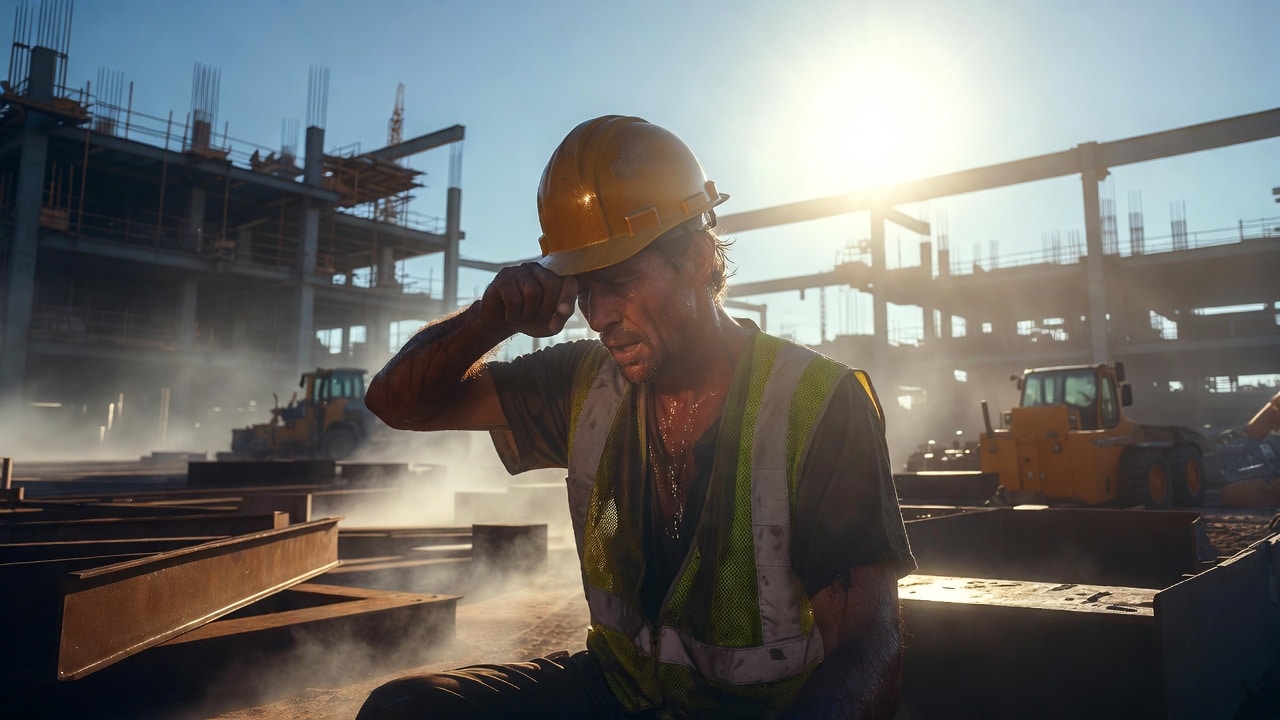
It’s 7:30 a.m. on a scorching June morning, and Marcus, a new hire on your commercial construction site, steps out of the truck into a wall of heat. The thermometer reads 95°F, but the sun reflecting off the metal structures nearby makes it feel closer to 110°F. By midday, he’s exhausted, lightheaded, and struggling to concentrate. By 2 p.m., he’s experiencing dizziness and nausea—the early signs of heat exhaustion. Without immediate intervention, his condition could escalate to heat stroke, a medical emergency that damages cells and can be fatal.
This scenario plays out on job sites across America every summer. Heat-related illness is one of the most preventable workplace hazards—yet it remains deadly. Workers in construction, agriculture, oil and gas, and manufacturing face relentless heat exposure that can overwhelm even experienced professionals. And new workers face the highest risk: nearly 150% of heat fatalities occur within the worker’s first few days on the job, a critical window when bodies haven’t yet adapted to the heat.
The solution isn’t exotic or complex. It’s a tool that’s been gaining traction in forward-thinking safety programs: the cool-down trailer. In this guide, we’ll explain what cool-down trailers are, how they work, why they’re a critical component of heat illness prevention, and how to choose the right one for your operation.
1. What Is a Cool-Down Trailer?
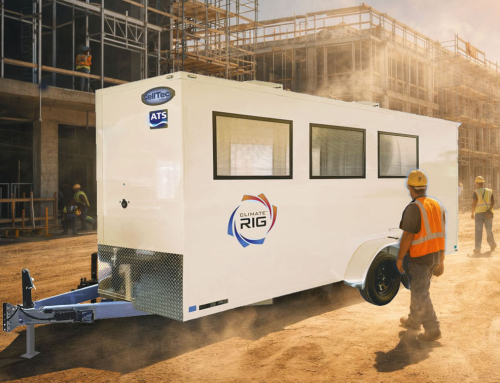
A cool-down trailer is a mobile, climate-controlled station designed to provide rapid heat relief to workers exposed to extreme temperatures. Think of it as a portable oasis—a dedicated space where overheated workers can step out of the sun and recover safely.
 At its core, a cool-down trailer is a towable unit equipped with mechanical refrigeration and insulated walls. Unlike a basic portable air conditioner or a shade structure, a cool-down trailer combines three essential elements:
- Mechanical cooling: Active refrigeration that chills the interior regardless of humidity levels or ambient temperature
- Thermal insulation: Advanced insulated panels that prevent external heat from penetrating the interior
- Capacity and accessibility: A space large enough to accommodate multiple workers simultaneously, with easy entry from the job site
Cool-down trailers are purpose-built for occupational heat stress mitigation. They’re not living quarters or storage units repurposed for cooling. They’re engineered specifically to deliver rapid core temperature reduction in workers showing early signs of heat stress.
2. How Cool-Down Trailers Work
Understanding the mechanics of a cool-down trailer helps explain why they’re so effective. Most modern cool-down trailers use mechanical (vapor-compression) cooling—the same technology as your home air conditioner or refrigerator.
The Cooling Cycle
Here’s how it works:
- Evaporation: Refrigerant in the evaporator coil absorbs heat from the interior air, causing the liquid to evaporate into a gas
- Compression: A compressor pressurizes the refrigerant gas, which raises its temperature
- Condensation: The hot, pressurized gas flows to the condenser coils outside, where it releases heat to the ambient air and condenses back into liquid
- Expansion: The liquid refrigerant flows through an expansion device back into the evaporator, and the cycle repeats
The result is steady, reliable cooling that works in any humidity level. Unlike evaporative coolers (swamp coolers), which are ineffective above 50% humidity, mechanical cooling performs consistently in wet, dry, hot, and moderate conditions.
Key Technical Components
A modern cool-down trailer like the ClimateRig typically includes:
- Dual refrigeration units: Two independent cooling systems provide redundancy and capacity (the ClimateRig uses dual 16,000 BTU Fogatti InstaCool Ultra units, totaling 32,000 BTU or approximately 2.67 tons of cooling)
- High-efficiency refrigerant: Modern trailers use low-GWP (global warming potential) refrigerants like R32, which are more efficient and environmentally friendly than older R-410A refrigerant (R32 has a GWP of 675, which is 68% lower than R-410A, and provides approximately 5% greater cooling efficiency)
- Advanced insulation: 2CellTech insulated panels reduce solar heat load, ensuring that exterior temperature doesn’t rapidly degrade interior cooling
- Proper sizing: A well-designed cool-down trailer has sufficient interior volume and air circulation to accommodate the expected number of workers (the ClimateRig offers 128 square feet of interior space, with a safe capacity for up to 18 workers)
- Portability: Cool-down trailers are light enough to tow with standard pickup trucks—the ClimateRig weighs approximately 2,500 lbs and is towable by half-ton pickup trucks
The result: workers can reduce their core body temperature by 2–3°F in as little as 15–20 minutes—a critical intervention during the onset of heat exhaustion.
3. Why Workers Need Cool-Down Trailers
The case for cool-down trailers rests on three pillars: the magnitude of the heat illness crisis, the physiology of heat stress, and the window of opportunity for prevention.
The Heat Illness Epidemic
Heat-related workplace deaths are rising. In 2023, 355 workers died from occupational heat exposure in the United States—a 28% increase from 2022. But the official count likely underestimates the true toll, as heat-related deaths are often misclassified or attributed to other causes.
Certain industries face disproportionate risk:
- Construction: While construction represents 7% of the U.S. workforce, 4workers in construction account for 33–39% of all occupational heat deaths
- Agriculture: Farm workers face the highest per-capita heat death rate, 5approximately 3.1 deaths per 1 million workers—nearly five times the rate of construction workers
- Oil & gas, manufacturing, and outdoor labor: Any worker routinely exposed to heat faces elevated risk
Beyond fatalities, heat-related illness causes thousands of emergency room visits annually and significant productivity losses. 6The total annual economic cost of heat stress to the U.S. economy is estimated at $100 billion—a figure that captures medical costs, lost productivity, workers’ compensation claims, and absenteeism.
The Physiology of Heat Stress
Heat illness progresses along a continuum. Understanding the stages is critical to appreciating why rapid cool-down matters:
- Heat exhaustion: Core body temperature rises to 100–104°F. Symptoms include heavy sweating, weakness, dizziness, nausea, and rapid heartbeat. Heat exhaustion is reversible with prompt cooling.
- Heat stroke: Core body temperature exceeds 104°F. Sweating may paradoxically stop, and confusion, loss of consciousness, or seizures may occur. Heat stroke causes cellular damage and is a medical emergency. Without immediate cooling, heat stroke can be fatal or cause permanent neurological damage.
The critical window is during heat exhaustion, before the condition progresses to heat stroke. A worker experiencing dizziness, weakness, or nausea needs rapid cooling—and a cool-down trailer delivers exactly that.
The Acclimatization Challenge
New workers and workers returning after time off face a compounded risk. Heat acclimatization—the process by which the body adapts to repeated heat exposure—takes time. 7Full acclimatization requires 7–14 days of progressive exposure. During that window, 8new workers show a 20% increase in heat illness risk for each additional day of exposure before acclimatization occurs.
This explains why 950–70% of heat-related deaths occur within a worker’s first few days on a hot job—a critical window when the body’s cooling systems haven’t yet adapted to the extreme environment. A cool-down trailer mitigates this risk by providing immediate relief when the body is least prepared to handle heat stress.
4. Cool-Down Trailers vs. Other Heat Mitigation Methods
Cool-down trailers aren’t the only tool in a comprehensive heat illness prevention program. To understand their role, it’s helpful to compare them to other common heat mitigation strategies:
| Method | Mechanism | Effectiveness | Best Use Case |
|---|---|---|---|
| Shade structures | Blocks direct sun, reduces radiant heat | Reduces skin temperature; core temp still rises | Prevention during moderate heat; not effective for active cooling during heat stress |
| Portable AC units | Mechanical cooling in a movable box | Cools air, but often undersized; requires adequate power | Small spaces or temporary setups; limited capacity |
| Misting systems | Evaporates water on skin to remove heat via evaporative cooling | Effective only in low-humidity climates; ineffective above 50% humidity; doesn’t reduce core temp as rapidly | Dry climates; supplemental cooling only |
| Cold water immersion | Rapid heat transfer via skin contact with cold water | Fastest core temp reduction (can reduce by 5–7°F in 15 minutes) | Emergency cooling for suspected heat stroke; requires medical supervision and water access |
| Cool-down trailers | Mechanical refrigeration in insulated, enclosed space | Reduces core temp 2–3°F in 15–20 minutes; works in all humidity; accommodates multiple workers simultaneously | Proactive heat illness prevention on large job sites; can scale to entire teams |
The comparison reveals cool-down trailers’ strategic advantage: they deliver effective, reliable cooling to multiple workers simultaneously, work in any climate, and don’t require medical training or special equipment. They’re the practical middle ground between shade (passive) and cold-water immersion (maximum intervention), making them ideal for occupational heat stress prevention programs.
Importantly, cool-down trailers complement other heat mitigation strategies. A comprehensive heat illness prevention program uses all of these tools in concert: shade and hydration for prevention, cool-down trailers for early intervention, and cold-water immersion (with EMS on standby) as a last resort for heat stroke emergencies.
5. Key Features to Look for in a Cool-Down Trailer
Not all cool-down trailers are created equal. When evaluating options for your operation, prioritize these features:
Cooling Capacity (BTU Rating)
Why it matters: A undersized cooling system will cool slowly or fail to maintain target interior temperatures on the hottest days. A well-designed trailer should deliver 32,000 BTU of cooling (approximately 2.67 tons) to reliably maintain a 65–70°F interior in extreme heat.
What to look for: Dual independent refrigeration units provide redundancy—if one unit fails, the second keeps the trailer operational. Look for specifications that guarantee a specific interior temperature under defined conditions (e.g., maintains 68°F with ambient temp up to 110°F).
Refrigerant Efficiency
Why it matters: Refrigerant type affects both cooling efficiency and environmental impact. Modern low-GWP refrigerants (like R32) provide better efficiency than older formulations and reduce your operation’s carbon footprint.
What to look for: Ask about refrigerant type and GWP rating. R32 is becoming an industry standard for its 5% efficiency improvement and 68% reduction in global warming potential compared to R-410A.
Insulation Quality
Why it matters: Poor insulation means your cooling system works harder, uses more fuel, and fails to maintain stable interior temperatures. Advanced insulation panels reduce solar heat load and improve consistency.
What to look for: Ask about insulation material (modern cool-down trailers use advanced composite panels like CellTech), R-value specifications, and wall thickness. Thicker, higher-R-value insulation translates to better performance and lower operating costs.
Capacity
Why it matters: A cool-down trailer must accommodate your workforce during breaks. If it’s too small, workers will queue and wait, reducing the effectiveness of the cool-down period.
What to look for: Look for trailers offering at least 128 square feet of interior space with a documented safe occupancy (e.g., 12–18 workers depending on usage pattern). Interior layout should allow multiple workers to rest comfortably without crowding.
Towability
Why it matters: You need to move the trailer between job sites. It should be light enough for standard pickup trucks but sturdy enough to withstand rough terrain.
What to look for: Trailers weighing under 3,000 lbs are towable by half-ton pickups (most modern cool-down trailers meet this threshold). Ensure the trailer has proper lighting, safety chains, and a hitch rated for your towing vehicle.
Power Requirements
Why it matters: Operating costs and site logistics depend on power availability. Some trailers are diesel-powered (self-contained), while others require shore power or a generator.
What to look for: Ask about power requirements and operating costs (fuel or electricity per hour). Self-contained units offer flexibility; generator-powered units provide portability; shore-powered units offer lower operating costs if permanent site power is available.
Maintenance and Support
Why it matters: A trailer that breaks down mid-summer is useless. Look for manufacturers offering reliable technical support and available replacement parts.
What to look for: Manufacturer warranty, availability of parts and service, and responsiveness to technical support calls. Prefer brands with established dealer networks and strong industry reputations.
6. Renting vs. Buying Cool-Down Trailers
One of the first decisions you’ll face is whether to rent or purchase a cool-down trailer. Each approach has merits depending on your operation’s characteristics:
| Factor | Renting | Buying |
|---|---|---|
| Upfront cost | Low; only pay for the duration of use | High capital investment ($20K–$60K+) |
| Maintenance | Vendor responsible; included in rental cost | Your responsibility; includes repairs, refrigerant recharges, inspections |
| Flexibility | High; rent only when needed (seasonal or project-specific) | Less flexible; trailer must be maintained year-round even if not in use |
| Multi-site management | Can have different trailers at different sites; easy scaling | Limited to the number of trailers you own; requires transportation between sites |
| Long-term cost | Higher if used continuously (rental rates add up) | Lower per-unit over 5+ years; better if used frequently |
| Customization | None; use standard rental units | Can customize specs and features to your exact needs |
Renting is ideal if: You have seasonal heat exposure (summer construction season), project-specific needs, or want to test effectiveness before committing to purchase. Renting lets you access top-quality equipment without maintenance burden.
Buying is ideal if: You operate year-round in hot climates, manage multiple concurrent projects requiring cooling, or have a long-term commitment to heat illness prevention. The per-use cost declines significantly over time.
Many operators use a hybrid approach: rent trailers for peak season or new projects while maintaining one owned unit as a baseline resource.
7. Cool-Down Trailer Costs & ROI
Understanding the financial case for cool-down trailers is critical to justifying the investment to leadership. Let’s break down both costs and returns.
Rental Costs
Monthly rental rates for quality cool-down trailers typically range from $2,000 to $5,000, depending on unit specifications and local market rates. A 6-month summer season costs $12,000–$30,000. Longer rentals often negotiate volume discounts.
Purchase Costs
A production-grade cool-down trailer with dual cooling units, advanced insulation, and 128 sq ft capacity typically costs $25,000–$60,000 new, depending on specifications. Annual operating costs (fuel/electricity, refrigerant recharges, maintenance, inspections) run $2,000–$5,000 per year. A 10-year operational life puts the total cost at $45,000–$110,000.
The ROI Case
The financial return comes from reducing heat-related absences, preventing medical emergencies, and avoiding regulatory penalties.
Avoided costs:
- Productivity loss: 10At 90°F, workers lose approximately 25% productivity; at 100°F+, losses exceed 70%. A cool-down trailer sustains productivity by preventing fatigue and illness during peak heat hours.
- Workers’ compensation: Heat-related claims cost $5,000–$50,000+ per incident, depending on severity. Preventing even one heat-related absence per season saves money.
- OSHA penalties: 11OSHA serious violations for heat-related incidents carry minimum penalties of $16,550 per violation; willful violations are penalized at $165,514 each. Preventing even one reportable incident saves tens of thousands.
- Medical costs: 12The total cost of heat stress to the U.S. economy is estimated at $100 billion annually. Your operation’s share is the sum of medical expenses, lost productivity, and absenteeism linked to heat-related illness.
- Turnover and recruitment: Workers in industries with strong safety reputations are easier to recruit and retain. A cool-down trailer signals genuine commitment to worker safety.
A conservative estimate: preventing one serious heat-related incident annually (emergency room visit, hospital stay, or OSHA citation) pays for the entire cool-down trailer investment.
For a more detailed analysis of heat illness costs and their business impact, 13see our guide to the hidden costs of heat stress in the workplace.
8. How to Choose the Right Cool-Down Trailer for Your Team
Selecting a cool-down trailer requires balancing several factors. Use this decision framework:
Step 1: Assess Your Heat Exposure Profile
- Geographic region: Which states do you operate in? (Some states now have heat standards; see Section 9 below)
- Seasonality: Year-round or seasonal heat exposure?
- Job site characteristics: Are you in direct sun (highest risk), partial shade, or industrial settings?
- Workforce size and composition: How many workers are exposed to heat? What percentage are new to heat-exposed work?
Step 2: Define Your Requirements
- Cooling capacity needed: For outdoor summer work, assume your cool-down trailer should maintain 65–70°F in ambient heat up to 110°F. This typically requires 32,000+ BTU.
- Occupancy: How many workers need simultaneous cool-down access? Ensure your trailer can accommodate peak demand comfortably (allow at least 8 sq ft per worker).
- Mobility: Do you need to move the trailer between job sites frequently? If so, ensure it’s light enough for your fleet’s towing capacity.
- Power source: What power sources are available at your typical job sites? (Shore power, generator, diesel engine?)
Step 3: Evaluate Vendors and Products
- Request detailed specifications: cooling capacity (BTU), insulation (R-value), refrigerant type, interior dimensions, weight, power requirements, and warranty
- Ask for references from operators in your industry
- Compare total cost of ownership over your expected usage period (3, 5, 10 years)
- Test if possible: visit a vendor’s demo or trial a unit on a pilot project before committing to a full-season rental or purchase
Step 4: Plan Integration with Your Heat Illness Prevention Program
A cool-down trailer isn’t a standalone solution. Integrate it into a comprehensive heat illness prevention program that includes:
- Hydration: Provide unlimited access to drinking water; monitor intake
- Shade: Provide rest areas with shade during peak heat hours
- Acclimatization: Ramp new workers into heat exposure gradually; monitor closely during the first 7–14 days
- Monitoring: Train supervisors to recognize early signs of heat illness (fatigue, dizziness, nausea, rapid heartbeat)
- Medical emergency plan: Ensure EMS access and trained first-aid responders on site during high-heat days
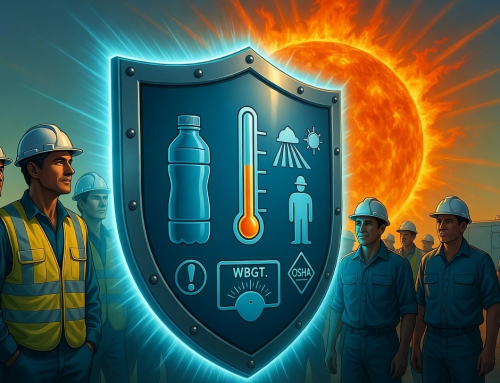
- 14WBGT monitoring: Use wet-bulb globe temperature (WBGT) measurement rather than simple heat index to account for radiation, humidity, and wind—a more accurate indicator of occupational heat stress risk
For a detailed guide to comprehensive heat illness prevention, see 15our complete guide to protecting workers from heat stress with monitoring and prevention strategies.
9. Cool-Down Trailers & OSHA Compliance
OSHA and federal regulators are increasingly focused on occupational heat stress. Cool-down trailers play a strategic role in a compliant heat illness prevention program.
Current Regulatory Landscape
As of February 2026, the federal OSHA heat standard remains in proposed form. The 17proposed rule (NPRM published August 30, 2024) includes temperature thresholds at 80°F (initial trigger for controls) and 90°F (high-heat trigger for enhanced controls). The rule is still pending finalization; an informal hearing period concluded in July 2025, but a final rule has not yet been issued.
However, don’t wait for final federal rules. Seven states have already implemented or finalized heat standards:
- California: Comprehensive heat illness prevention regulation (CCR § 3395)
- Oregon: Heat illness prevention standard
- Washington: Heat-related illness prevention standard
- Maryland: Heat illness prevention standard (effective September 30, 2024)
- Minnesota: Heat stress rule
- Nevada: Heat illness prevention standard (effective April 2025)
- Colorado: Heat illness prevention amendments (effective 2026)
All of these state standards include rest, hydration, and shade/cooling requirements. Regulations vary by state, so verify current requirements with your state OSHA office if you operate in these jurisdictions.
Cool-Down Trailers in Regulatory Context
A cool-down trailer is more than a nice-to-have: it’s a documented control measure that demonstrates proactive compliance with both state regulations and the federal General Duty Clause (which requires employers to maintain a workplace free from recognized hazards).
In the event of a heat-related incident, documentation that you:
- Provided cool-down facilities (the trailer)
- Conducted WBGT monitoring (to assess heat stress risk)
- Trained workers and supervisors on heat illness recognition
- Maintained an emergency action plan (with EMS access)
…demonstrates that you took reasonable precautions. This strengthens your defense against OSHA citations and shows a genuine commitment to worker safety that regulators and injured workers’ families will recognize.
For a detailed walkthrough of OSHA heat regulations and compliance strategies, 18see our comprehensive guide to preparing for OSHA heat illness regulations.
10. Getting Started: Your Next Steps
You now understand what cool-down trailers are, why they matter, and how to evaluate options. Here’s how to move forward:
Immediate Actions
- Audit your heat exposure: Document which job sites, seasons, and worker groups face the highest heat stress risk. Prioritize deployments to the highest-risk scenarios.
- Check state regulations: If you operate in California, Oregon, Washington, Maryland, Minnesota, Nevada, or Colorado, review your state’s heat standard immediately. Document gaps in your current heat illness prevention program.
- Request a pilot: Contact cool-down trailer vendors and request a short-term rental for a high-risk project or season. Test effectiveness and gather worker feedback before committing to larger investment.
- Involve your safety team: Brief your EHS professionals and supervisors on cool-down trailers. Get their input on integration with your existing heat illness prevention program.
Planning & Implementation
- Develop a heat illness prevention program: Cool-down trailers work best as part of a comprehensive approach. Document your controls: hydration, shade, acclimatization, monitoring, and emergency response. 19Get a custom ROI estimate for cool-down trailers and comprehensive heat illness prevention.
- Train your team: Ensure supervisors can recognize heat illness signs and know how to direct workers to the cool-down trailer. Provide all workers with heat stress awareness training.
- Establish usage protocols: Define clear guidelines: How often should workers use cool-down trailers during peak heat? For how long? What are the thresholds (temperature, WBGT) that trigger trailer deployment?
- Monitor and refine: Track usage data, worker feedback, and heat-related incidents. Adjust your program based on real-world experience.
Decision: Rent or Buy?
- Pilot with a rental: If you’ve never used a cool-down trailer, rent one for a single season. The low commitment cost lets you learn what works without large capital investment.
- Move to purchase: If your operation uses cooling consistently (multiple projects, multiple seasons), purchase becomes cost-effective. A well-maintained trailer lasts 10–15 years.
- Scale strategically: As your operation grows, consider owning one or two trailers as baseline resources while renting additional units seasonally to meet peak demand.
Taking Action
The good news: cool-down trailers are not experimental or exotic. They’re proven, commercially available, and increasingly becoming industry standard in heat-exposed industries. The manufacturers, rental vendors, and regulatory environment all support their adoption.
The better news: by deploying a cool-down trailer, you’re making a clear statement to your workforce that their safety matters more than productivity deadlines. Workers remember that. They work harder, stay longer, and recommend your company to peers. That’s a cultural shift that reduces both heat-related incidents and overall workplace injury rates.
Request your cool-down trailer quote today. 20Contact our team to discuss your operation’s heat mitigation strategy and explore ClimateRig specifications, rental options, or purchase pricing. We’ll help you build a heat illness prevention program that protects your workers, supports regulatory compliance, and improves your bottom line.
References
- AFL-CIO. “Death on the Job 2024: The Toll of Neglect.” American Federation of Labor and Congress of Industrial Organizations, 2024.
- ClimateRig. “The Heat Response of CellTech Panels: A Deep Dive.” ClimateRig.com Technical Guide.
- AFL-CIO, ibid. (2024 data showing 55 deaths and 28% increase from 2022)
- Center for Construction Research and Training (CPWR). Construction Industry Heat-Related Illness Statistics.
- Schulte, P. A., et al. “Occupational Heat Exposure and Health Outcomes.” National Center for Biotechnology Information, 2022.
- Public Citizen. “The Costs of Heat Stress to the U.S. Economy.” Public Citizen Research Institute, 2023.
- CDC/NIOSH. “Heat Stress.” Centers for Disease Control and Prevention, National Institute for Occupational Safety and Health.
- OSHA. “Heat Illness Prevention.” Occupational Safety and Health Administration.
- AFL-CIO, ibid. (50-70% occur within first few days)
- Schulte, P. A., et al., ibid. (Productivity loss data at 90°F and 100°F+)
- OSHA. “Penalty Amounts.” Occupational Safety and Health Administration, 2024.
- Public Citizen, ibid. ($100B annual cost estimate)
- ClimateRig. “The Hidden Cost of Heat Stress in the Workplace.” ClimateRig.com Guide.
- ClimateRig. “Wet-Bulb Globe Temperature (WBGT) Guide.” ClimateRig.com Technical Reference.
- ClimateRig. “Protecting Workers from Heat Stress: A Comprehensive Guide to Monitoring and Prevention.” ClimateRig.com.
- ClimateRig. “ClimateRig Helps Employers Meet OSHA’s New Heat Safety Standards.” ClimateRig.com Guide.
- OSHA. “Occupational Heat Illness Prevention (Proposed Rule).” Federal Register, August 30, 2024.
- ClimateRig. “Preparing for OSHA’s Heat Illness Regulations: A Comprehensive Guide for Employees.” ClimateRig.com.
- ClimateRig. “Get a Custom ROI Estimate for Heat Illness Prevention.” ClimateRig.com.
- ClimateRig. “Request Your Cool-Down Trailer Quote Today.” ClimateRig.com Contact & Quote Page.
About the author : Stephen

Stephen Allred is a dynamic and accomplished executive with over 20 years of experience in sales and marketing, currently serving as the CMO and CTO of ATS. Renowned for his ability to craft highly effective marketing campaigns, he drives business growth through cutting-edge technology and a results-oriented approach, focusing on high-impact strategies that align with corporate goals while steering clear of ego-driven pursuits. With a deep understanding of customer behavior, Stephen creates compelling campaigns that resonate with consumers, underpinned by the discipline to prioritize the most critical tasks. Boasting over 25 years of management experience, he is a committed leader dedicated to assembling talented teams and unlocking their potential to achieve ambitious objectives. As an adept strategist, he draws on an extensive study of both modern thought leaders and historical figures like Clausewitz and Sun Tzu to devise plans that propel corporate success. A champion of continual learning, Stephen stays ahead of industry trends and fosters a culture of innovation, encouraging his team to think creatively and embrace calculated risks. He graduated Magna Cum Laude from Utah Valley University with a Bachelor’s degree in Finance, where his exceptional performance earned him the prestigious “Outstanding Student Award.”