How to Build an OSHA-Compliant Heat Illness Prevention Plan
1. Introduction — Why You Need a Written Heat Illness Prevention Plan Now
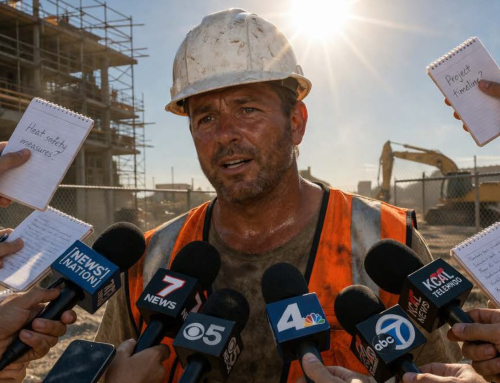
In June 2024, California regulators issued a citation that should alarm every employer in heat-exposed industries: $276,425 for a single company’s failure to implement basic heat controls. The violations? No written heat illness prevention plan, no access to drinking water, no shaded rest areas, and no heat safety training.1
This wasn’t a Fortune 500 company. It was a mid-sized operation that simply hadn’t formalized its heat safety practices into a documented plan. And it’s happening across the country.
The reality is stark: 43 workers died from heat exposure in 20222, and approximately 3,400 non-fatal heat injuries occur annually3—yet many of these incidents are preventable with a well-designed Heat Illness Prevention Plan (HIPP). OSHA’s National Emphasis Program on heat has extended through April 20264, meaning proactive inspections are ongoing. Five states—California, Oregon, Washington, Maryland, and Minnesota—already have final heat illness prevention standards, while a comprehensive federal rule is expected in late 2025 or early 2026.5
The message is clear: employers cannot wait. Whether your company operates in a state with active standards or under OSHA’s General Duty Clause, you need a written, comprehensive heat illness prevention plan—and you need it now, not after an inspection or citation.
This guide consolidates OSHA’s scattered guidance, state requirements, and occupational health science into one actionable framework. By the end, you’ll understand the 10 essential components every compliant plan must contain, how to build each section, and how to position your operation to withstand scrutiny during an OSHA inspection.
What Makes This Guide Different
Most heat illness prevention guidance falls into one of two categories: either too regulatory (copying OSHA language verbatim) or too vague (generic tips without structure). This guide bridges that gap with a practical, section-by-section blueprint employers can actually implement. You’ll find not just what OSHA requires, but how to translate those requirements into a functional document that protects workers and demonstrates compliance.
If you want to understand the regulatory landscape broadly, read our Complete 2026 Employer Guide to OSHA Heat Illness Prevention. This post focuses on building the plan itself.
—
2. Understanding Your Audience: Who Must Review and Approve Your Plan
Before you start writing, clarify who within your organization must be involved. A heat illness prevention plan doesn’t exist in a vacuum—it intersects with multiple departments and roles:
- Safety Manager/EHS Professional: Typically authors the plan and owns ongoing compliance
- Operations/Project Manager: Must understand work-rest schedules and how to implement monitoring on site
- HR Director: Coordinates training documentation and medical accommodations
- Field Supervisors: Execute the plan daily; their input on feasibility is critical
- Legal/Compliance Team: Reviews for liability exposure and regulatory defensibility
- Medical/Occupational Health Provider (if available): Advises on acclimatization protocols and worker screening
Include representatives from these groups in the plan’s development. A plan written only by HR or only by field supervisors will lack either legal defensibility or practical implementation, and both are essential.
—
3. The 10 Essential Components of an OSHA-Compliant Heat Illness Prevention Plan
Every compliant heat illness prevention plan must address these 10 core elements. Some are drawn from state standards (California’s Title 8 §3395); others from OSHA guidance and the proposed federal rule. Together, they form the foundation of a defensible, comprehensive program.
Component 1: Water Provision and Hydration Standards
Regulatory Requirement: Provide drinking water in quantities that allow at least 1 quart per hour per employee.6
Your plan must specify:
- Quantity: Minimum 1 quart (32 ounces) per hour per worker; for an 8-hour shift in heat, this means at least 50 ounces available at all times
- Quality: Water must be fresh, pure, and suitably cool (not room temperature or warm)
- Accessibility: Located within a 5-minute walk of the work area; workers should not have to travel excessively to hydrate
- Cost: Provided free of charge to all employees
- Electrolyte Consideration: If work in heat exceeds 2 hours, consider providing electrolyte replacement (sports drinks or electrolyte supplements). Do not recommend salt tablets unless directed by a physician.7
Write into your plan: “Water will be positioned at [specific locations on site]. Supervisors will monitor consumption and encourage workers to drink 8 ounces every 15–20 minutes, not just when thirsty. On days when heat index exceeds 90°F, electrolyte-containing beverages will be available alongside plain water.”
Component 2: Rest and Cool-Down Procedures
Regulatory Requirement: Provide paid rest breaks when workers feel the need to cool down, with mandatory rest schedules increasing with ambient temperature.
Your plan must specify:
- Duration: Minimum 5 minutes per rest break, plus time to access the cool-down area
- Frequency by Heat Level:
- Heat Index 80–90°F: Paid rest breaks when worker feels the need
- Heat Index 90–100°F: Mandatory 10-minute rest per 2 hours of work in shade or cool area
- Heat Index 100°F+: Mandatory 15-minute rest per hour of work
- Location: Shaded area or climate-controlled environment (more on this in Component 3)
- Monitoring: Supervisor must check on worker, ask about heat illness symptoms, and encourage continued rest if symptoms persist
- Return to Work Clearance: Workers must not resume work until heat illness symptoms have fully resolved (minimum 5 minutes rest required before return assessment)
Example language: “Supervisors will enforce mandatory rest breaks using the schedule above. Workers experiencing dizziness, nausea, weakness, or excessive sweating will remain in the cool-down area until symptoms resolve and a supervisor confirms readiness to return to work.”
Component 3: Shade and Cool-Down Area Requirements
Regulatory Requirement: When ambient temperature exceeds 80°F, provide adequate shade or alternative cooling as close to the work area as practicable.
This is critical: shade and cool-down area adequacy is central to OSHA enforcement. Your plan must specify:
- Definition of Adequate Shade: Blockage of direct sunlight; shade structure must be elevated or positioned to allow air circulation underneath. Shaded area must have a temperature monitored and verified to actually enable cooling
- Specifications:
- Open on three sides (not enclosed in a way that traps heat)
- Exposed to air movement
- Large enough to accommodate the number of workers needing simultaneous shade
- As close to work area as practicable (not a 10-minute walk away)
- Alternative Cooling Options: Air-conditioned vehicle, air-conditioned building, tent with misting fans, or climate-controlled cool-down station
- Temperature Monitoring: Shade effectiveness varies by ambient temperature and humidity. On a 95°F day with high humidity, passive shade may only reach 88–92°F—not low enough for rapid core body cooling. Consider active cooling for work sites in high-heat conditions
Example: “Cool-down areas will be positioned at [specific site locations]. Shade tents will be installed per California Title 8 specifications. Temperature will be monitored hourly; if interior shade temperature exceeds 85°F, supplemental cooling (misting fans or air-conditioned alternative) will be added. All workers are entitled to rest breaks in these areas every [X] minutes or per heat level schedule.”
For construction sites, landscaping operations, or projects where permanent shade isn’t feasible, mobile cool-down trailers provide a climate-controlled alternative that meets this requirement unambiguously. A temperature-controlled environment guarantees rapid core body cooling—approximately 33.8°F reduction in 15 minutes—making work cycles more sustainable and manageable.
Component 4: Acclimatization Protocols
Regulatory Requirement: Implement a written acclimatization schedule for new workers and workers returning after 2+ weeks of absence.
This is where physiology meets policy. Acclimatization isn’t just “getting used to heat”—it’s cellular adaptation: plasma volume expansion, enhanced sweat production, and heat shock protein activation. Your plan must specify:
- New Worker Schedule (Rule of 20 Percent):
- Days 1–2: 20% of normal workload (1 hour 40 minutes of an 8-hour shift)
- Days 3–4: 40% of normal workload
- Day 5: 60% of normal workload
- Day 6: 80% of normal workload
- Day 7+: 100% of normal workload
- Returning Workers (absent 2+ weeks): Can acclimatize faster (50%, 69%, 80%, 100% over 4 days) because cellular adaptations partially persist
- Medical Screening: Workers with obesity, cardiovascular disease, diabetes, age 65+, or on medications affecting heat tolerance (diuretics, stimulants, antipsychotics) may require longer acclimatization or medical clearance
- Monitoring During Acclimatization: Supervisor must observe closely for heat illness symptoms during this period; workers are at higher risk
Write it plainly: “All new workers will follow the Rule of 20 Percent schedule regardless of prior heat exposure. Supervisors will document each worker’s acclimatization dates and monitor closely for dizziness, nausea, or weakness. Workers with medical conditions affecting heat tolerance will be discussed with [occupational health provider/HR] before assignment to heat work.”
Component 5: WBGT Monitoring and Action Triggers
Regulatory Requirement: Monitor heat conditions regularly and escalate controls when dangerous thresholds are reached.
Heat index is not enough. WBGT (Wet Bulb Globe Temperature) is the occupational standard because it accounts for humidity, radiant heat, and air movement—the actual factors that determine whether a worker’s body can cool itself. Your plan must specify:
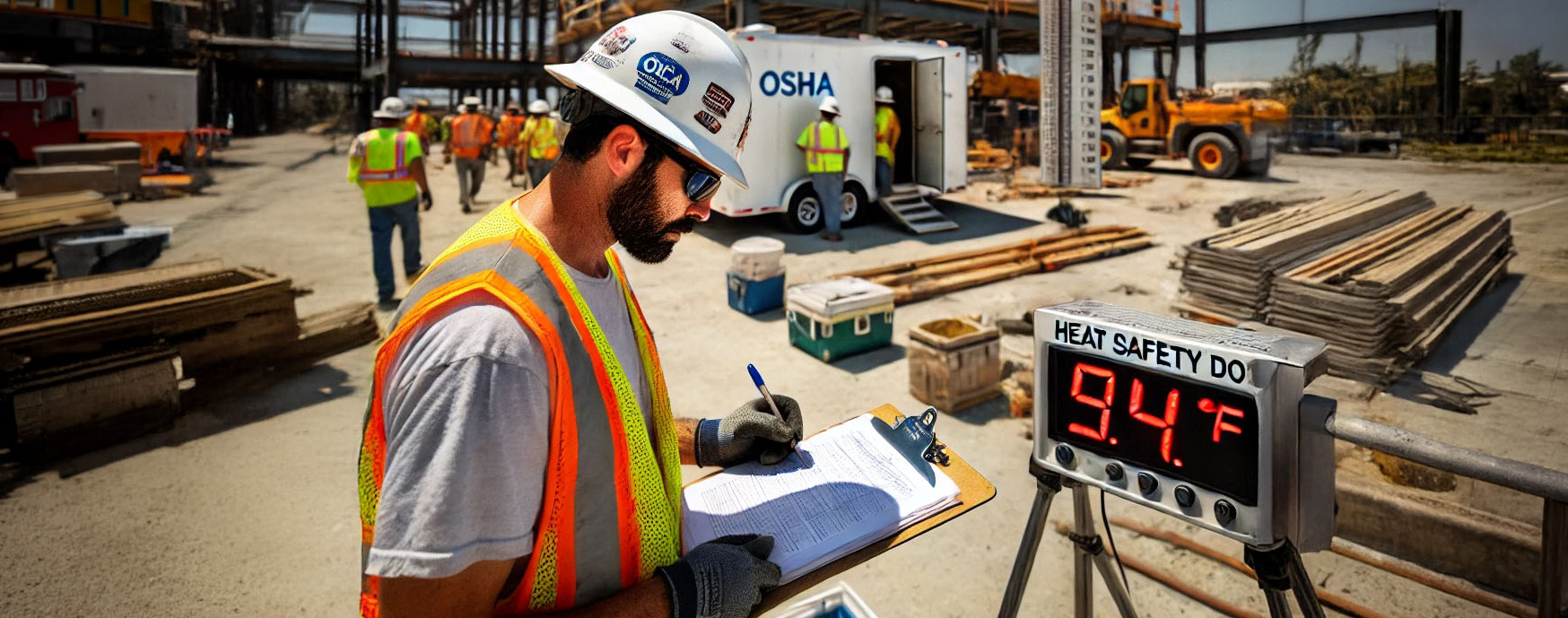
- Measurement Tool: Which WBGT meter, thermometer, or heat index source you’ll use (e.g., “Kestrel 5400 Heat Stress Monitor” or “National Weather Service heat index”)
- Measurement Frequency: At least hourly on hot days; more frequently when heat alerts are in effect or during heat waves
- Action Triggers:
- WBGT 80°F: Provide water, shade, rest breaks, regular monitoring, communication systems
- WBGT 85–90°F: Mandatory rest schedules (10-min per 2 hours); enhanced supervisor monitoring; position first aid responder nearby
- WBGT 90°F+: Intensive controls—frequent rest breaks, enhanced monitoring, first aid on site, communication devices pre-positioned, consider work stoppage
- Recordkeeping: Log WBGT readings throughout the day; this creates an audit trail for OSHA inspections and shows you were monitoring in real-time
For detailed guidance on WBGT measurement and interpretation, see our comprehensive WBGT guide.
Component 6: Emergency Response Procedures
Regulatory Requirement: Document how to recognize heat illness and respond immediately with first aid and emergency services.
Your plan must cover:
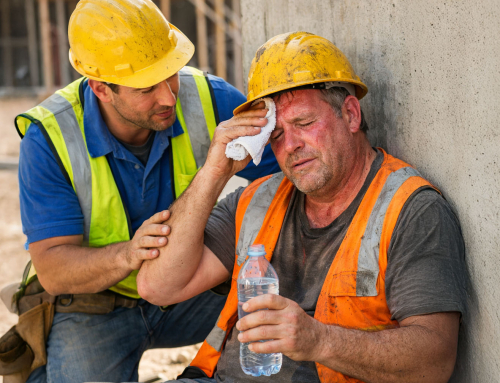
- Heat Illness Symptom Recognition: Distinguish between heat cramps (least severe), heat exhaustion, and heat stroke (medical emergency)
- Heat Exhaustion: Heavy sweating, weakness, dizziness, nausea, fast weak pulse, pale clammy skin
- Heat Stroke: Confusion, irrational behavior, slurred speech, seizures, lack of sweating, very high body temperature (106°F+)
- Immediate Response Protocol:
- Move worker to cool area
- Remove excess clothing
- Apply cool water to skin; place ice packs under armpits and groins
- Provide water if conscious
- Use fans to enhance cooling
- Call 911 immediately if worker shows confusion, disorientation, seizures, loss of consciousness, or lack of sweating
- Buddy System: Ensure an ill worker is never left alone; assign a buddy to stay with them and monitor
- Medical Services Coordination:
- Post-positioning of first aid responders on high-heat days
- Ensure supervisors know site address and landmark for 911 response
- Pre-arrange meeting point for ambulance
- No Sending Worker Home: Injured workers must be offered onsite first aid or emergency medical services; don’t send them home to “rest”
Component 7: Training Program Requirements
Regulatory Requirement: All employees must receive heat illness prevention training before beginning work in heat.
Your plan must specify:
- Training Content (minimum):
- Environmental and personal risk factors for heat illness
- How to recognize heat illness symptoms
- First aid procedures for heat illness
- Acclimatization importance
- Hydration and electrolyte needs
- This plan: what the company provides and worker responsibilities
- Supervisor-Specific Training (additional):
- Regular heat monitoring (WBGT or heat index)
- Recognizing symptoms, especially in workers wearing heavy PPE
- Initiating cooling and calling 911
- Documenting incidents
- Frequency: Annual minimum, before each heat season, and for all new hires
- Documentation: Keep records of training dates, attendees, trainer credentials, topics, and duration. Retain for 3+ years
- Language: Training must be provided in languages understood by your workforce (required by California; best practice everywhere)
Component 8: Clothing and Personal Protective Equipment (PPE) Considerations
Regulatory Requirement: Assess how required clothing and PPE increase heat stress and adjust controls accordingly.
Heavy PPE—respirators, hazmat suits, high-visibility vests, hard hats—can increase core body temperature burden by 1–35.6°F. Your plan must address:
- PPE Inventory: List all required PPE for each job classification (e.g., “roofing crew requires: hard hat, vest, gloves, safety glasses”)
- Heat Burden Assessment: Recognize that workers in heavy PPE need shorter work cycles. Adjust rest break frequency to compensate
- Lightweight Alternatives: Where possible, allow lighter-weight PPE or materials that breathe better in heat
- Modification for High-Heat Conditions: Describe any PPE that can be modified or relaxed when heat index exceeds a certain threshold (e.g., “hard hat may be removed during rest breaks but must be worn during work”)
Component 9: Medical Removal and Accommodations
Regulatory Consideration: Address workers with heat-related medical conditions or predisposing risk factors.
Your plan should include:
- Medical Screening: A process for identifying workers who may be at higher risk (age 65+, obesity, cardiac disease, medications affecting heat tolerance)
- Physician Clearance: If a worker has a medical condition, require occupational health provider clearance before assignment to heat work
- Accommodations: Modified work schedules, additional rest breaks, or reassignment to lower-heat roles for workers at elevated risk
- Confidentiality: Medical information is private; keep accommodations confidential
- No Retaliation: Clearly state that workers requesting medical accommodation or refusing work due to unsafe heat will not be retaliated against
Component 10: Documentation and Recordkeeping
Regulatory Requirement: Document what you’re doing so you can prove compliance during inspections.
Your plan must specify what records you’ll keep:
- WBGT/Heat Index Readings: Daily log of temperature monitoring during work hours
- Training Documentation: Dates, attendees, topics, trainer credentials
- Incident Reports: Any heat-related injury, illness, or near-miss with date, worker name, symptoms, action taken, and outcome
- Acclimatization Records: New workers’ acclimatization schedule completion dates
- Medical Accommodations: Confidential file of workers requiring modifications (separate from main personnel files)
- Retention Period: Keep all records for a minimum of 3 years (OSHA standard; California requires longer for some items)
- Inspection-Ready Format: Organize records so you can quickly demonstrate compliance if OSHA arrives unannounced
—
4. Building Your Plan: Structure and Format
Now that you understand what must be included, here’s how to structure a professional, defensible document:
Recommended Plan Format
- Executive Summary (1 page): Overview of your heat hazard assessment and commitment to worker safety
- Hazard Assessment (2–3 pages): Description of work sites, seasons, temperatures, job types, number of workers affected
- Control Procedures (8–12 pages): Detailed procedures for water, rest, shade, acclimatization, WBGT monitoring, emergency response
- Training Program (4–6 pages): Training content, schedule, and documentation procedures
- Emergency Response Procedures (3–4 pages): Heat illness symptom recognition, first aid steps, 911 protocols, contact information
- Appendices: Training sign-off sheets, incident report templates, acclimatization schedule worksheets, WBGT monitoring log, emergency contact information
What OSHA Expects to See
OSHA inspectors look for evidence that your plan is written, site-specific, and actively implemented—not a generic template from the internet. Strengthen your plan by:
- Naming specific locations: “Cool-down station at the west corner of the job site” rather than “a cool-down area”
- Assigning responsibility: “Safety Manager John Smith is responsible for daily WBGT monitoring” rather than “monitoring will occur”
- Setting thresholds specific to your work: “Roofing crews move to 10-minute rest breaks when WBGT exceeds 85°F” rather than “rest when hot”
- Describing how you’ll enforce it: “Supervisors will use the attached checklist to verify water is accessible and shade is adequate before starting work”
—
5. Customizing Your Plan by Industry
While the 10 components above apply universally, different industries face different heat profiles. Brief industry-specific considerations:
Construction (Roofing, Demolition, Heavy Equipment Operation)
- Exposure: Direct sun, radiant heat from materials, high metabolic rates
- Key Challenge: Moving cool-down area as project progresses
- Solution: Mobile cool-down stations (like the ClimateRig) that can be repositioned daily, preventing workers from walking extended distances to cool down
- PPE Burden: Hard hats, reflective vests, respirators in certain tasks—account for increased thermal burden in rest schedules
Oil & Gas Operations
- Exposure: Extended outdoor shifts, remote locations, heavy equipment operation
- Key Challenge: Limited access to shade or cooling infrastructure
- Solution: Climate-controlled command centers or mobile cooling solutions positioned at well sites
- Communication: Ensure workers in remote areas have radio/cell communication to report symptoms
Agriculture and Landscaping
- Exposure: Long hours in direct sun, high physical exertion, outdoor-only work
- Key Challenge: Seasonal workers, language barriers, workers paid by piece-rate (disincentive to take breaks)
- Solution: Mandatory break enforcement (not voluntary), training in workers’ primary languages, clear penalties for supervisors who ignore heat protocols
- Acclimatization: Extra attention to seasonal/new workers—many are new to the job and the heat
Manufacturing and Indoor Facilities
- Exposure: Furnaces, steam, high ambient temperatures (foundries, smelters, kitchens)
- Key Challenge: High radiant heat, humid environments that prevent evaporative cooling
- Solution: Engineering controls (improved ventilation, insulation) may be necessary alongside personal controls (rest breaks, cooling stations)
- WBGT Monitoring: Essential because ambient temperature understates actual heat stress in radiant-heat environments
—
6. Compliance Verification: Pre-Inspection Self-Audit
Before OSHA arrives, conduct an internal audit using this checklist:
- ☐ Written heat illness prevention plan exists and is dated/signed
- ☐ Plan is site-specific (names locations, assigns responsibility, sets specific thresholds)
- ☐ Water provision: Verify quantity on site, accessibility, quality (cooled), and free availability
- ☐ Shade/cool-down area: Inspect for adequate blockage of sun, air circulation, capacity, and proximity to work
- ☐ Acclimatization: Documentation of new worker schedules and adherence
- ☐ WBGT monitoring: Daily logs completed, readings recorded at required frequency
- ☐ Rest breaks: Enforcement documentation showing breaks are taken at required intervals
- ☐ Training: All workers and supervisors trained; sign-off sheets on file with training date, topics, duration
- ☐ Emergency procedures: Printed and posted; supervisors can describe response steps when asked
- ☐ Incident documentation: Records of any heat-related injury/illness with date, worker name, symptoms, action taken
- ☐ Medical accommodations: File of workers with medical restrictions (kept confidential)
If you can check all boxes and produce documentation for each, you’re audit-ready.
—
7. Implementation and Ongoing Management
Launching Your Plan
A written plan is worthless if it sits in a drawer. Effective implementation requires:
- Communication: Hold a team meeting before heat season begins. Review the plan with all supervisors and key workers. Make it clear that heat safety is non-negotiable
- Visible Commitment: Post the plan on the job site. Display cool-down schedules. Make water stations obvious
- Training: Conduct formal training for all workers and supervisors before work begins
- Supervisor Empowerment: Ensure supervisors understand they have authority—and responsibility—to enforce rest breaks and shut down work if heat becomes dangerous
Annual Review and Updates
Heat standards evolve, and your plan should too. At minimum, annually:
- Review incident reports from the previous season—did heat illness occur? Why? How can you prevent recurrence?
- Update WBGT action triggers based on experience (e.g., “We found that rest breaks at 82°F WBGT were sufficient last year; maintain this threshold”)
- Incorporate new state or federal regulations
- Adjust staffing, equipment, or processes that affect heat exposure
- Update emergency contact information and first aid protocols
Recording and Reporting Requirements
OSHA requires employers to record heat-related injuries and illnesses on Form 300 (injury/illness log) if they result in:
- Days away from work
- Restricted work (modified duties)
- Medical treatment beyond first aid
- Loss of consciousness
Report fatalities or hospitalizations to OSHA within 8 hours (toll-free 1-800-321-OSHA). Keep all records for 5 years.
—
8. How Technology and Cool-Down Solutions Support Your Plan
Modern tools make plan implementation more reliable and measurable. Consider:
WBGT Monitoring Devices
Real-time WBGT meters (Kestrel 5400, QUESTemp, REED monitors) provide the precision your plan requires. They eliminate guesswork and create a defensible record that you were monitoring and escalating controls appropriately. Mobile app integration allows supervisors to log readings throughout the day and generate compliance reports automatically.
Mobile Cool-Down Stations
For construction sites, landscaping operations, or projects where permanent shade isn’t feasible, mobile climate-controlled cool-down trailers solve multiple plan requirements simultaneously:
- Shade/Cool-Down Requirement: A climate-controlled environment (maintained at 68–72°F) meets the “shade or alternative cooling” requirement unambiguously. Temperature is guaranteed, not dependent on sun angle or humidity
- Rapid Core Cooling: Workers can reduce core body temperature by approximately 33.8°F in 15 minutes in a cool environment—enabling more aggressive work cycles and better worker safety
- Capacity: A mobile cool-down unit can accommodate 15–18 workers simultaneously, allowing staggered rest breaks for large crews without work stoppage
- Logistical Flexibility: Can be positioned at the work zone, eliminating travel time to cool down and encouraging compliance with rest breaks
- Medical Assessment: Provides a controlled environment where supervisors can monitor workers showing heat illness symptoms and decide whether to escalate to emergency services
Learn how the ClimateRig’s cooling capacity aligns with OSHA’s heat illness prevention requirements. For teams already implementing a prevention plan, active cooling addresses the most logistically challenging component—reliably providing adequate rest and cooling without work interruption.
Digital Documentation Tools
Cloud-based platforms allow supervisors to log WBGT readings, document rest breaks, record training, and track incidents in real-time. This creates an automatically organized audit trail that proves compliance to OSHA inspectors—no more scrambling to find handwritten notes and scattered documents.
—
9. Conclusion: From Plan to Prevention Culture
A written heat illness prevention plan is your foundation, but compliance is the goal. The most effective plans reflect a company culture where heat safety is genuinely prioritized—where supervisors enforce rest breaks without hesitation, where workers feel empowered to report symptoms without fear of retaliation, and where leadership visibly commits resources to cooling infrastructure and training.
The financial case is clear: a single heat illness incident can cost $37,000–$79,000 in direct and indirect expenses.8 OSHA citations start at $16,550 per violation.9 Fatalities trigger multimillion-dollar liability exposure. By contrast, the cost of implementing a comprehensive prevention plan—water stations, shade, acclimatization documentation, training—is minimal relative to the risk.
And morally, the argument is simpler: workers have the right to go home safe. A heat illness prevention plan makes that possible.
Ready to implement your plan? Use the 10-component framework above to draft your site-specific document. If you need guidance on cool-down area solutions or want to discuss how mobile climate-controlled cooling fits into your prevention strategy, contact ClimateRig’s safety team for a no-obligation consultation. We help employers move from compliance documents to resilient, sustainable heat safety programs.
—
References
- 1 California Department of Industrial Relations. “Serious Willful Heat Violations.” https://www.dir.ca.gov/DIRNews/2024/2024-105.html
- 2 U.S. Bureau of Labor Statistics. “Work-Related Deaths Due to Environmental Heat Exposure, 2021.” https://www.bls.gov/opub/ted/2023/36-work-related-deaths-due-to-environmental-heat-exposure-in-2021.htm
- 3 CDC/NIOSH. “Heat-Related Illness and Injury.” https://www.cdc.gov/niosh/heat-stress/about/illnesses.html
- 4 OSHA. “National Emphasis Program on Heat-Related Hazards.” https://www.osha.gov/sites/default/files/enforcement/directives/CPL-03-01-024.pdf
- 5 OSHA. “Heat Injury and Illness Prevention Rulemaking.” https://www.osha.gov/heat-exposure/rulemaking
- 6 California Department of Industrial Relations. “Title 8 §3395: Heat Illness Prevention.” https://www.dir.ca.gov/dosh/heatillnessinfo.html
- 7 CDC/NIOSH Blog. “Heat Stress: Why Electrolytes Matter.” https://blogs.cdc.gov/niosh-science-blog/2011/08/12/heat-2/
- 8 OSHA. “Safety Pays: Heat Prostration Injury Costs.” https://www.osha.gov/safetypays
- 9 OSHA. “2025 Penalty Adjustments.” https://www.osha.gov/memos/2025-01-07/2025-annual-adjustments-osha-civil-penalties
- 10 OSHA. “Water, Rest, and Shade Guidance.” https://www.osha.gov/heat-exposure/water-rest-shade
- 11 NIOSH. “Criteria for a Recommended Standard: Occupational Exposure to Heat and Hot Environments.” https://www.cdc.gov/niosh/docs/2016-106/default.html
About the author : Stephen

Stephen Allred is a dynamic and accomplished executive with over 20 years of experience in sales and marketing, currently serving as the CMO and CTO of ATS. Renowned for his ability to craft highly effective marketing campaigns, he drives business growth through cutting-edge technology and a results-oriented approach, focusing on high-impact strategies that align with corporate goals while steering clear of ego-driven pursuits. With a deep understanding of customer behavior, Stephen creates compelling campaigns that resonate with consumers, underpinned by the discipline to prioritize the most critical tasks. Boasting over 25 years of management experience, he is a committed leader dedicated to assembling talented teams and unlocking their potential to achieve ambitious objectives. As an adept strategist, he draws on an extensive study of both modern thought leaders and historical figures like Clausewitz and Sun Tzu to devise plans that propel corporate success. A champion of continual learning, Stephen stays ahead of industry trends and fosters a culture of innovation, encouraging his team to think creatively and embrace calculated risks. He graduated Magna Cum Laude from Utah Valley University with a Bachelor’s degree in Finance, where his exceptional performance earned him the prestigious “Outstanding Student Award.”