
Construction Site Cooling: Complete 2026 Safety Guide
Construction Site Cooling: The Complete Guide to Keeping Workers Safe
Legal Disclaimer: This article provides information about heat stress prevention best practices, cooling technologies, and the regulatory landscape for occupational health and safety. It is not legal advice, medical advice, or a substitute for consultation with occupational safety professionals or legal counsel. Heat illness prevention regulations vary by jurisdiction, state, and industry. Consult with your occupational safety professional, site medical provider, or legal counsel to determine applicable requirements for your specific operation. Use of the ClimateRig or any cooling technology does not by itself ensure compliance with occupational health and safety standards.
1. Why Construction Site Cooling Is Critical This Summer
Construction workers face an unequal share of heat-related danger in the American workplace. While construction comprises only 7% of the U.S. workforce, construction workers account for over one-third (34%) of all occupational heat-related deaths—a striking disparity that reflects the hazards unique to outdoor, physically demanding work in extreme temperatures.1 In 2023 alone, 18 of the 55 occupational heat-related deaths reported by the U.S. Bureau of Labor Statistics occurred in construction.2
This isn’t just a safety issue—it’s a business crisis. Construction sites lose an estimated $100 billion annually to heat-related injuries, illnesses, and productivity losses.3 Heat-related fatalities and injuries are also driving dramatic increases in workers’ compensation claims; approximately 20% of all heat-related illness claims in the United States originate from construction.4
As summer 2026 approaches, construction project managers and safety professionals face a new urgency: OSHA’s proposed federal Heat Illness Prevention Standard is expected to finalize in early 2026, establishing explicit requirements for heat safety planning, worker hydration, rest schedules, and cooling measures. Whether you’re in a state with existing heat standards (California, Oregon, Washington, Maryland, Minnesota, Colorado) or awaiting federal rulemaking, comprehensive construction site cooling is no longer optional—it’s a regulatory requirement and a competitive necessity.
This guide covers the complete spectrum of construction site cooling strategies, from foundational hydration and shade management to engineered cooling solutions like cool-down trailers. You’ll discover a practical framework for implementing heat safety on your projects, understanding OSHA compliance requirements, and positioning your team for worker protection and operational resilience.
2. Understanding Construction Worker Heat Stress (and How Cooling Helps)
Heat Stress Physiology 101
Heat stress occurs when the human body cannot dissipate accumulated metabolic heat fast enough to maintain safe core body temperature. During outdoor construction work—especially in July and August, which account for 40 and 23 heat-related deaths respectively among construction workers2—workers face a triple threat: direct solar radiation, reflected heat from materials like concrete and asphalt, and the metabolic heat generated by heavy physical labor.
A concrete slab in 95°F sunlight can reach surface temperatures of 140-160°F, creating radiant heat exposure that significantly increases thermal load on workers.5 This radiant heat is not captured by traditional air temperature measurements, which is why specialists use Wet Bulb Globe Temperature (WBGT) to assess actual heat stress risk on construction sites.
The physiological response progresses through predictable stages. Early heat stress triggers excessive sweating and elevated heart rate as the body attempts to shed heat. If cooling mechanisms fail, core temperature rises, leading to heat exhaustion (dizziness, nausea, weakness, rapid heart rate). Without intervention—particularly rapid core temperature reduction—heat exhaustion can progress to heat stroke, a life-threatening medical emergency characterized by loss of sweating, confusion, and organ dysfunction.
This progression is why construction site cooling strategies work: they interrupt the heat stress cascade by enabling rapid core temperature reduction during rest breaks, the moment when physiological intervention is most effective. A 15-minute session in a climate-controlled environment can contribute significantly to rapid core temperature reduction during heat exhaustion, when early intervention is most beneficial.6
WBGT Monitoring and Temperature Thresholds
WBGT (Wet Bulb Globe Temperature) is a heat stress index that accounts for four major environmental factors: ambient air temperature, humidity, radiant heat from the sun or nearby materials, and wind speed. Unlike heat index—which measures only air temperature and humidity in the shade—WBGT reflects the actual thermal environment a worker experiences on an active construction site.7
NIOSH recommends WBGT-based Recommended Exposure Limits (RELs) for hot work environments. Most states with existing heat standards (California, Oregon, Maryland) and OSHA’s proposed federal standard use 80°F heat index or equivalent WBGT as the threshold triggering mandatory rest, shade, and hydration. When WBGT exceeds 82.4°F, productivity losses accelerate sharply; at WBGT above 86°F, work-rest schedules must be adjusted significantly to prevent heat illness.8
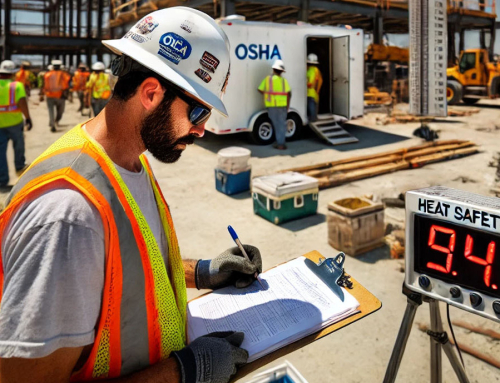
For construction sites, portable WBGT meters are essential tools. Devices like TSI’s QUESTemp Heat Stress Monitors provide real-time WBGT measurements, allowing supervisors to make informed decisions about work schedules, break frequency, and the need for enhanced cooling interventions like cool-down facilities.
3. How to Keep Construction Workers Cool: The Complete Methods Framework
Administrative Controls (Hydration, Scheduling, Acclimatization)
The foundation of any heat safety program rests on administrative controls—management decisions that reduce heat exposure and risk.
Hydration Protocol: Workers should consume 5-7 ounces of fluid every 15-20 minutes, equivalent to ¾-1 quart per hour.9 Cool water (50-59°F) is absorbed most rapidly. Water must be easily accessible without requiring workers to abandon work areas, and communal drinking containers should be prohibited. Even minor dehydration (3% body weight loss) reduces work capacity by up to 20%.10 For extended work shifts, carbohydrate-electrolyte drinks help prevent heat cramps; electrolyte composition should include 20-30 mEq of sodium and 2-5 mEq of potassium per liter.10 (Note: Individual workers may have different electrolyte needs based on health conditions or medications; consult your site medical professional for site-specific guidance.)
Work-Rest Schedules: Once heat index reaches 80°F, rest breaks become mandatory. At 90°F, a standard protocol calls for 10-minute rest breaks every 2 hours in shaded or cooled areas. As WBGT increases above 82.4°F and work intensity rises, rest frequency and duration should increase proportionally.9 Schedule physically demanding tasks—concrete pours, heavy framing, structural steel—during cooler morning hours. Finish or significantly reduce work before peak heat hours (3:00–6:00 PM).
Acclimatization: This is the single most critical control. 50-70% of heat-related deaths occur in workers’ first few days on the job, because the body requires 7-14 days to build physiological tolerance to heat.11 New and returning workers must follow structured acclimatization:
- New/Unacclimatized Workers:
- Day 1: 20% of scheduled work duration
- Days 2-5: Increase by 20% daily (40%, 60%, 80%, 100%)
- Days 1-14: Close supervision and frequent monitoring
- Experienced Workers (seasonal):
- Day 1: 50% heat exposure
- Day 2: 60% heat exposure
- Day 3: 80% heat exposure
- Day 4+: Full work permitted
During the high-risk acclimatization period, workers face 3-5x higher heat illness risk than acclimatized crews. Cool-down facilities should be prioritized as part of comprehensive heat safety programs, particularly during early-season work and onboarding. Combined with enhanced monitoring, frequent breaks, and strict acclimatization protocols, rapid cooling during rest periods supports risk reduction during this critical window.
Engineering Controls (Shade, Ventilation, Cooling Systems)
Shade Structures: When ambient temperature exceeds 80°F, shade structures must be erected if no natural shade is readily available. Shade structures reduce apparent temperature by 10-15°F compared to direct sunlight.12 Temporary canopies, umbrellas, and tent structures are foundational controls; they should remain accessible throughout the workday without requiring workers to leave their work areas.
Misting and Evaporative Cooling: Advanced misting systems use ultra-fine droplets (5-30 microns) that cool through local evaporation. Shade structures combined with misting provide a wider thermal comfort range than shade alone, particularly in low-humidity environments.13 A comprehensive approach integrates mandated breaks supported by mobile shaded tents with purified water stations and isotonic drinks.
Portable Cooling Vests and Wearable Technology: Workers can wear evaporative cooling vests (like Ergodyne Chill-Its) for passive cooling, or advanced phase-change materials (TechNiche StayQool Suits) that reduce skin temperature by up to 14°F for seven hours.13 Water-activated cooling patches (Eztia HydraVolt Arctic Patch) deliver 50°F cooling for eight hours without electricity. Smart wearables—like the Proxgy SmartHat (CES 2024 Innovation Award)—integrate temperature monitoring and heart rate sensors with cellular connectivity, alerting supervisors when workers approach dangerous heat stress levels, often 15-30 minutes before visible symptoms appear.13
Monitoring and Compliance Tools
Deploy heat monitoring technologies and protocols including:
- WBGT Meters: Portable devices measuring real-time heat stress to drive work-rest decisions
- Thermal Cameras: Identify hot spots on job sites and measure surface temperatures of materials
- Heat Stress Apps: Mobile tools calculating WBGT, tracking work hours, and alerting supervisors
- Worker Check-In Systems: Buddy systems where workers monitor each other for heat illness signs
- Site Documentation: Record temperature readings, rest breaks, work hours, and any heat-related incidents for OSHA compliance
4. Construction Site Cooling Solutions: A Practical Comparison
Temporary Shade Structures (Cost, Setup, Limitations)
Cost: $500–$5,000 per structure depending on size and durability
Setup: Quick deployment; minimal equipment; can be erected in hours
Effectiveness: Reduces apparent temperature 10-15°F; foundational but insufficient alone in extreme heat
Limitations: Does not provide active cooling; offers only relief from direct sun; in very hot climates (WBGT >82.4°F), shade alone may not reduce core temperature sufficiently for safe recovery
Active Cooling Equipment (Fans, Misting Systems)
Cost: $1,000–$10,000 per site depending on scale
Setup: Requires power supply; installation time varies; ongoing maintenance
Effectiveness: Fans improve air circulation and evaporative cooling; misting systems provide measurable temperature reduction in dry climates
Limitations: Limited to fixed locations; requires stable power; misting effectiveness varies with humidity; does not provide enclosed, climate-controlled environment
Mobile Climate-Controlled Trailers (Cool-Down Trailers)
Cost: $3,000–$8,000 per month rental (or purchase $80,000–$150,000+)
Setup: Delivered ready-to-use; minimal on-site preparation; can be repositioned across multi-site projects
Effectiveness: Delivers 32,000 BTU non-evaporative air conditioning, creating 20-30°F temperature drop in 15 minutes. Workers can sit in ice-cold AC, recovering core temperature rapidly before returning to work. This faster recovery mechanism than shade structures alone is more effective at enabling workers to safely resume labor in extreme heat conditions (WBGT >86°F).14 Unlike passive shade, mobile climate-controlled trailers provide actual air conditioning with genuine temperature control.
Advantages:
- Mobile deployment for multi-site projects
- Capacity for 18 workers simultaneously
- No setup required; plug-and-play operation
- Durable construction (one-piece fiberglass walls, heavy aluminum edging) withstands construction environments
- CellTech panel insulation technology maximizes cooling efficiency while minimizing energy draw
- Can be positioned strategically across job sites so workers don’t walk excessive distances for relief
Limitations: Higher cost than shade structures; requires electrical power (30-50 amp service); space planning needed on crowded sites
Shade structures remain essential foundational controls. Mobile climate-controlled trailers are an additional engineering control for high-heat scenarios, particularly when WBGT exceeds 82.4°F or when rapid worker recovery is essential for productivity and safety.
Cost-Benefit Analysis: ROI of Cooling Infrastructure
Heat-related illness is extraordinarily expensive. Workers experiencing heat exhaustion or heat stroke require emergency medical care (often $10,000–$50,000 in ambulance and ER costs), generate workers’ compensation claims averaging $20,000–$100,000 per incident, cause project delays, and trigger morale and retention problems.
By contrast, construction site cooling infrastructure delivers measurable ROI:
- Productivity Gains: 60% of construction workers exposed to elevated temperatures experience significant productivity loss, with declines ranging from 29–41%.8 Reducing heat stress through cooling enables workers to maintain full productivity during peak work periods.
- Recruitment & Retention: Workers prioritize safety and comfort. Offering comprehensive heat protection—including cool-down facilities—differentiates your company and reduces costly turnover in a competitive labor market.
- Injury Prevention: One heat-related serious injury avoided saves $30,000–$100,000+ in direct and indirect costs.
- Compliance: Avoiding OSHA citations (currently up to $16,550 per violation; willful violations $11,823–$165,51415) and workers’ compensation rate increases is a direct financial benefit.
5. What You Need to Know About OSHA Heat Requirements for Construction
Current Enforcement: The General Duty Clause
OSHA currently enforces heat illness prevention under the General Duty Clause (Section 5(a)(1) of the OSH Act), which requires employers to provide working conditions free of recognized hazards likely to cause death or serious physical harm. OSHA has already cited numerous heat-related violations under this provision. As of August 2024, OSHA reported:
- Approximately 7,000 heat-related inspections conducted
- 60 heat citations issued
- 1,392 Hazard Alert Letters issued to employers16
- Over $2 million in heat-related penalties in 2024 alone17
OSHA extended the National Emphasis Program (NEP) on Outdoor and Indoor Heat-Related Hazards through April 8, 2026, maintaining heightened enforcement activity across construction and other targeted sectors. Don’t assume heat enforcement is weak; the General Duty Clause is already an active enforcement mechanism, and citations are being issued.
State-Specific Heat Standards
Six states plus the District of Columbia have established permanent occupational heat stress standards that apply now:
California (Title 8 §3395 & §3396): Requires training, water, shade, acclimatization, and written plans. Outdoor standard triggers at 80°F; indoor standard at 82°F. Most comprehensive state standard.
Oregon (OAR 437-002-0156): Applies to outdoor workers. Triggers at 80°F (heat index or WBGT). Requires rest periods, hydration, shade, acclimatization, and training.
Washington (WAC 296-307-097+): Applies to outdoor workers (does not currently cover indoor workers). Requires paid, preventative cool-down breaks in shade or other cooling measures.
Minnesota: Permanent standard for indoor heat exposure only. Specifies temperature limits ranging from 77–86°F depending on work intensity and acclimatization. Does not establish outdoor standards.
Colorado: Has heat-related requirements in the agricultural sector; does not have a comprehensive universal occupational heat standard.
Maryland: Adopted permanent heat illness prevention standard effective September 30, 2024. Applies when heat index reaches 80°F (indoor or outdoor). Requires heat safety plans, temperature monitoring, training, and emergency procedures.
Consult your safety professional or OSHA directly for specific compliance requirements applicable to your operation. Requirements may vary based on state jurisdiction, industry, and specific work conditions.
The Proposed Federal OSHA Heat Standard (2026 Status)
OSHA’s federal heat standards remain in proposed form. In August 2024, OSHA published a Notice of Proposed Rulemaking for “Heat Injury and Illness Prevention in Outdoor and Indoor Work Settings.” The public comment period ended October 30, 2025. As of February 2026, the final rule has not yet been published, but finalization is anticipated in early 2026.18
The proposed federal standard would require:
- Written heat safety plans for employers with 10+ employees
- Provision of rest, shade, hydration, acclimatization, and emergency response procedures
- Work-rest schedules based on heat stress levels and worker acclimatization status
- Monitoring of heat hazards and worker heat illness recognition
- Employee training on heat illness signs, prevention, and emergency response
- Access to medical evaluation and first aid services
Construction employers should not wait for final rulemaking to implement comprehensive heat safety programs. Once the federal heat standard is finalized, it will establish explicit regulatory requirements; but the practices outlined in this guide align with recommended occupational health standards and OSHA’s anticipated requirements.
6. Building a Construction Site Cooling Plan: Step-by-Step Framework
Step 1: Assess Your Site (Conditions, Hazards, Workforce Size)
Environmental Assessment:
- Determine peak heat months and typical WBGT/heat index at your location during work season
- Identify job tasks with highest heat exposure (outdoor, physically demanding work in direct sun)
- Map natural shade availability; identify gaps requiring engineered shade
- Note proximity to water sources and electricity supply
- Assess site layout; identify strategic locations for cool-down facilities to minimize walking distance
Workforce Profile:
- Count employees exposed to heat; identify new/seasonal workers (highest risk during first 2 weeks)
- Document baseline health conditions and medications affecting heat tolerance
- Identify early-season projects requiring enhanced acclimatization protocols
- Plan crew rotations and task assignment to distribute heat exposure
Step 2: Select Cooling Methods (Layered Approach)
Administrative Controls (Implement First):
- Establish hydration requirements: minimum 5-7 oz. every 15-20 minutes, starting Day 1
- Schedule physically demanding work before 3:00 PM; avoid peak heat hours
- Design acclimatization protocol for new workers: 20% daily increase in work duration
- Establish work-rest schedules: 10-minute breaks every 2 hours at 80°F+; increase frequency as WBGT rises
Engineering Controls (Build On Foundation):
- Provide shade structures for all work areas; upgrade to misting systems in extreme heat zones
- Deploy WBGT meters or heat index apps to monitor real-time heat stress
- For projects where WBGT regularly exceeds 82.4°F, deploy mobile cool-down trailers at strategic locations
PPE & Personal Cooling (Individual Layer):
- Provide light-colored, moisture-wicking work clothing made from natural fibers (cotton) or synthetics
- Offer cooling vests or wearables for workers in highest-risk tasks
- Ensure access to ice water stations with coolers maintained at 50-59°F
Step 3: Implement Monitoring and Communication
- Daily Heat Assessment: Measure WBGT or heat index before work begins; adjust work-rest schedules based on readings
- Worker Buddy System: Pair workers to monitor each other for heat illness signs; empower them to notify supervisors immediately
- Supervisor Training: Train all supervisors to recognize heat exhaustion (dizziness, nausea, rapid heart rate) and heat stroke (confusion, loss of sweating, unconsciousness) and deliver immediate first aid
- Daily Briefing: Start each shift with a 5-minute safety briefing reviewing hydration, rest schedule, symptoms, and emergency procedures
- Documentation: Record temperature readings, rest breaks, work hours, and any near-misses or injuries for OSHA compliance verification
Step 4: Train Your Team and Measure Results
- Annual Training: All workers and supervisors must receive heat illness prevention training, including recognizing signs and emergency response
- Acclimatization Oversight: Supervisors directly monitor new workers during first 14 days, enforcing scheduled work duration increases and frequent rest breaks
- Performance Metrics: Track heat-related incidents (near-misses, injuries); measure productivity during peak heat months; compare against previous years
- Continuous Improvement: Review what worked and what didn’t at the end of peak heat season; update cooling plan for next year
7. Cool-Down Trailers: The Premium Engineering Control for Construction
What Is a Cool-Down Trailer?
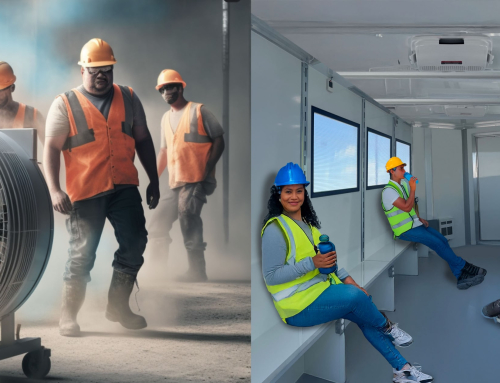
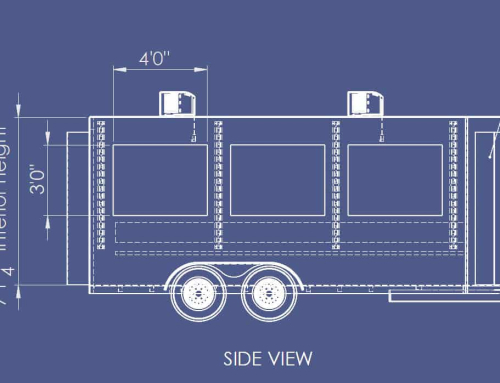
A cool-down trailer is a fully enclosed, mobile, climate-controlled unit that is towed to a construction job site where crews can walk inside, sit in air conditioning, and rapidly recover core temperature before returning to work. It arrives ready to use—no installation required. Workers can rest in ice-cold comfort during heat stress breaks, with access to water and snacks, allowing physiological recovery in 10-15 minutes of sustained cooling.
How Cool-Down Trailers Solve Construction Site Cooling Challenges
Unlike shade structures or misting systems, mobile climate-controlled trailers provide actual air conditioning with temperatures 20-30°F cooler than outside conditions. In extreme heat (WBGT >86°F), rapid cooling during rest periods is more effective than passive shade at enabling workers to safely resume labor. The ClimateRig is one component of a comprehensive heat illness prevention program. Effective heat safety requires integration with work-rest schedules, hydration programs, acclimatization protocols, and ongoing hazard monitoring. Consult with occupational safety professionals to design a complete heat safety program for your site.
Key advantages for construction:
- Mobility: Easily towed between job sites; perfect for rotating projects and seasonal work
- Scalability: Multiple trailers can be deployed across large projects to ensure no worker walks more than 5 minutes for relief
- Rapid Deployment: No setup; arrives at site ready to use
- Capacity: Typically accommodates 18 workers simultaneously, allowing frequent crew rotations
- Durability: Heavy-duty construction (one-piece fiberglass walls, reinforced aluminum framing) withstands rough job sites
Specifications That Matter
When evaluating cool-down trailers, prioritize:
- Cooling Capacity: Minimum 32,000 BTU non-evaporative air conditioning to deliver 20-30°F temperature drop
- Power Requirements: Confirm your site can supply adequate electrical service (typically 30-50 amp)
- Insulation Technology: CellTech panel insulation technology maximizes cooling efficiency, reducing energy consumption and operating costs
- Seating & Amenities: Comfortable seating for multiple workers, mini-fridge for cold water, power outlets for charging devices
- Portability: Can be towed by standard construction vehicles (half-ton truck or larger); does not require heavy-equipment transport
Deployment Advantages for Multi-Site Projects
For general contractors managing multiple projects simultaneously, mobile cool-down trailers offer unmatched flexibility. A single trailer—or fleet of trailers—can be repositioned weekly as work rotates between sites. This mobility ensures consistent worker cooling support across an entire portfolio of projects without expensive fixed infrastructure. Strategic placement across large job sites minimizes walking distance, ensuring workers can access cooling without abandoning work areas.
8. Construction Site Cooling in Extreme Heat Scenarios
WBGT Thresholds and Work-Rest Decisions
WBGT-based decision matrices guide supervisors in real time. Once WBGT exceeds 82.4°F, standard work schedules are insufficient. Work intensity and rest frequency must increase proportionally:
- WBGT 24-16.6°F (75-80°F): Standard work with mandatory hydration every 15-20 minutes and 10-minute rest breaks every 2 hours
- WBGT 28-20.2°F (82-84°F): Increase rest breaks to every 90 minutes; double water intake; monitor closely for heat illness signs
- WBGT 30-25.6°F (86-90°F): Work-rest ratio shifts toward rest; consider suspending heavy outdoor work; activate cool-down facilities
- WBGT >89.6°F (>90°F): Suspend heavy outdoor labor; limit work to light indoor tasks only if possible; prioritize worker safety over schedule pressure
Portable WBGT meters ($500–$2,000) are essential investments for construction sites where heat regularly becomes a hazard.
Emergency Response Protocols
Every site must have an emergency action plan addressing heat stroke (a medical emergency) and heat exhaustion. Assign specific roles: one person monitors for heat illness signs, another manages communication with emergency services, a third provides immediate first aid.
Critical Note: Heat stroke is a medical emergency requiring immediate 911 response. Cool-down facilities are designed for heat exhaustion recovery during rest breaks, not heat stroke treatment. If a worker exhibits signs of heat stroke (confusion, loss of sweating, unconsciousness), call 911 immediately. Do not delay emergency response to use cool-down facilities. Cool-down trailers support prevention of heat stroke by enabling rapid recovery during the heat exhaustion phase; they are not a substitute for emergency medical care.
Ensure your site has:
- Clear 911 access (cell service or direct phone lines)
- Clearly marked emergency procedures posted in multiple languages
- Trained first responders (CPR-certified, heat illness recognition)
- Ice water and cold compress supplies accessible at all times
- Coordination with local EMS (provide location, site map, contact person)
Heat Illness Recognition and First Aid
Heat Exhaustion Signs (Early Intervention Possible):
- Rapid heart rate
- Excessive sweating
- Extreme weakness or fatigue
- Dizziness or lightheadedness
- Nausea and vomiting
- Rapid, shallow breathing
Heat Exhaustion First Aid:
- Move worker to cool, shaded area immediately
- Offer cool liquids (water or electrolyte solution)
- Remove unnecessary clothing
- Apply cold compress or wash head, face, neck with cool water
- Monitor continuously; seek medical evaluation if symptoms persist
Heat Stroke Signs (Life-Threatening Emergency):
- Confusion, slurred speech, or altered mental status
- Sweating stops (critical indicator—sweating absence in hot conditions is emergency warning)
- Hot, dry skin
- Seizures
- Loss of consciousness or fainting
- High body temperature
Heat Stroke Emergency First Aid:
- Call 911 immediately (this is not optional)
- Cool worker aggressively with ice or cold water until help arrives
- Remove outer clothing
- Apply iced bedsheets or cooling packs to chest, armpits, and groin (major blood vessel areas)
- Do NOT give fluids by mouth if worker is unconscious or confused
- Continue cooling measures until emergency responders arrive and assume care
9. Investment ROI: Why Construction Site Cooling Pays for Itself
Hidden Costs of Heat-Related Illness (Productivity, Turnover, Liability)
Heat-related injuries and illnesses carry hidden costs far exceeding the direct medical expense:
- Direct Medical Costs: Heat stroke emergency care typically costs $20,000–$100,000+ per incident (ambulance, ER, hospitalization, ongoing care)
- Workers’ Compensation Claims: Average heat-related workers’ comp claim: $20,000–$100,000+ per worker, driving up insurance premiums for years
- Productivity Loss: Approximately 60% of construction workers exposed to elevated temperatures experience significant productivity loss ranging from 29–41%.8 A crew of 50 workers losing 35% productivity due to heat is equivalent to losing 17-18 workers’ worth of output
- Project Delays: Heat-related injuries trigger work stoppages, investigations, and schedule delays. Adverse weather events already delay 45% of construction projects annually; heat illness compounds project timeline impacts
- Turnover & Recruitment Costs: Workers exposed to heat without adequate cooling are more likely to quit. Replacing a skilled tradesperson costs 25-200% of annual salary in recruitment, training, and lost productivity
- Legal & OSHA Exposure: General Duty Clause citations can reach $16,550 per violation; willful violations $11,823–$165,514. Beyond penalties, heat-related injuries fuel workers’ comp litigation and third-party liability claims
Cost Comparison: Cooling Systems vs. Downtime Losses
Annual Cost of Basic Construction Site Cooling (Shade + Hydration + Monitoring):
- Shade structures: $2,000–$5,000 per year
- WBGT monitoring equipment: $500–$2,000 one-time + minimal maintenance
- Hydration supplies (ice, coolers, water): $2,000–$5,000 per year
- Staff training and documentation: $1,000–$3,000 per year
- Total baseline program: $5,500–$15,000 annually
Annual Cost of Cool-Down Trailer Rental (For High-Heat Projects):
- Single trailer monthly rental: $3,000–$8,000/month for 4-5 summer months = $12,000–$40,000 per season
- Electrical setup and site placement: $500–$2,000
- Total: $12,500–$42,000 per season for one trailer
Annual Cost Avoidance (One Heat-Related Serious Injury Prevented):
- Medical care: -$30,000–$100,000
- Workers’ comp claim settlement and rate increases: -$30,000–$200,000 (5-year impact)
- Lost productivity during investigation and replacement: -$20,000–$50,000
- Potential OSHA penalties: -$16,550+ (one violation minimum)
- Litigation and legal defense: -$50,000–$500,000+
- Total avoidance value: $146,550–$850,000+ per serious injury prevented
A single prevented heat-related serious injury (hospitalization, lasting effects, or fatality) justifies an entire year of comprehensive cooling infrastructure. For large contractors managing multiple projects, the ROI is even more compelling.
Competitive Advantage: Cooling as a Recruitment and Retention Tool
In a competitive labor market, worker safety and comfort directly influence hiring and retention. Contractors known for comprehensive heat protection programs attract higher-quality talent and experience lower crew turnover. When skilled tradespeople have options, they choose employers who prioritize their wellbeing. Conversely, companies with poor heat safety records lose workers to competitors and face recruitment challenges.
Positioning construction site cooling as a workforce investment—not just a compliance checkbox—enhances your brand reputation and competitive positioning with workers and clients alike.
10. Preparing Now for 2026 OSHA Requirements and Beyond
Whether OSHA’s federal heat standard finalizes in early 2026 or faces further delays, the direction is clear: heat illness prevention will soon be a specific regulatory requirement with explicit penalties. Construction companies that implement comprehensive heat safety programs now will be ahead of enforcement timelines and avoid costly last-minute scrambling.
Action Items for Construction Managers:
- Conduct a Heat Risk Assessment: Identify your projects’ highest-risk work tasks, peak heat seasons, and workforce characteristics (new vs. experienced, seasonal variations)
- Document Your Current Practices: Inventory existing hydration, shade, monitoring, and emergency procedures. Identify gaps.
- Develop Written Heat Safety Plans: Put your cooling program in writing, assign responsibilities, and establish monitoring protocols. This will satisfy the anticipated OSHA requirement.
- Invest in Monitoring Equipment: Portable WBGT meters, heat stress apps, and thermal cameras provide real-time decision support and compliance documentation
- Evaluate Cool-Down Infrastructure: For projects where WBGT regularly exceeds 82.4°F, cool-down trailers deliver measurable worker protection and regulatory alignment. Request a quote to evaluate fit for your operations.
- Train Your Workforce: Ensure all workers and supervisors receive annual heat illness prevention training. Document training completion for OSHA compliance.
- Track and Report: Maintain records of temperature monitoring, rest breaks, work hours, and any heat-related incidents. This documentation demonstrates good-faith compliance efforts.
Conclusion: Construction Site Cooling as Strategic Investment
Construction site cooling is no longer a discretionary safety measure—it is a regulatory imperative, a business necessity, and a moral obligation to protect workers from one of occupational safety’s most preventable hazards. From foundational hydration and shade management to engineered cooling solutions like cool-down trailers, a layered approach to heat stress prevention delivers measurable returns in worker safety, productivity, compliance, and competitive advantage.
The stakes are high. Heat-related illness kills construction workers at a rate nearly 5 times the workforce average. The costs of heat-related injuries—direct medical, workers’ compensation, productivity loss, project delays, and legal exposure—far exceed the investment in comprehensive cooling infrastructure. And OSHA enforcement is accelerating; the 2026 federal standard will establish explicit requirements that most construction companies have yet to meet.
Start now. Assess your heat risks, implement a layered cooling program, invest in monitoring and engineering controls, and commit to training and documentation. For projects operating in extreme heat (WBGT >82.4°F) or with large, dispersed crews, mobile climate-controlled cool-down trailers offer unmatched flexibility and effectiveness. The ClimateRig is designed as a rapid-recovery rest facility for workers experiencing early heat stress (elevated core temperature, fatigue). It is not intended as a substitute for emergency medical response to heat stroke. Ensure that your site has 911 access, clearly marked emergency procedures, and trained first responders prepared to provide immediate care if heat stroke occurs. The ClimateRig is one component of a comprehensive heat illness prevention program. Effective heat safety requires integration with work-rest schedules, hydration programs, acclimatization protocols, and ongoing hazard monitoring.
Ready to implement construction site cooling on your projects? Visit ClimateRig.com to learn more about mobile cool-down trailers and request a quote for your summer schedule. Our safety specialists can help you design a comprehensive heat illness prevention program tailored to your specific projects and workforce.
References
- U.S. Bureau of Labor Statistics. (2023). “36 work-related deaths due to environmental heat exposure in 2021.”
- Center for Construction Research and Training (CPWR). (2025). “Data Bulletin: Heat Injuries and Illnesses Among Construction Workers.” August 2025.
- Marsh. (2025). “Climate change: Managing the implications on construction.”
- Marsh. (2025). “Increases in extreme heat-related workers’ compensation claims in the US.”
- Occupational Safety and Health Administration (OSHA). “OSHA Technical Manual (OTM) – Section III: Chapter 4 – Heat Stress.”
- A Mobile Box. (2025). “How Mobile Office Trailers Help Construction Projects Stay Cool & Compliant in Summer.”
- National Weather Service. “Wet Bulb Globe Temperature.”
- Peng, J., et al. (2024). “Heat exposure and productivity loss among construction workers: a meta-analysis.” BMC Public Health.
- Centers for Disease Control and Prevention (CDC/NIOSH). “Workplace Recommendations | Heat.”
- National Center for Biotechnology Information (NCBI). “Considerations for Replacement Beverages: Fluid-Electrolyte Balance and Heat Illness.”
- CDC/NIOSH. “Heat Illness Prevention and Management for Outdoor Workers.”
- California Department of Industrial Relations. “Frequently Asked Questions Related to Outdoor Heat Illness Prevention.”
- Ringland Johnson Construction. (2025). “Construction Heat Safety Technology: Smart PPE & Wearables 2025.”
- A Mobile Box. (2025). “How Mobile Office Trailers Help Construction Projects Stay Cool & Compliant in Summer.”
- Occupational Safety and Health Administration (OSHA). (January 2025). “OSHA Announces 2025 Penalty Adjustments.”
- Occupational Safety and Health Administration (OSHA). (May 2024). “Department of Labor takes critical step in heat safety rulemaking, continues heightened enforcement efforts.”
- Perry Weather. “OSHA Heat Safety Rules for Outdoor Workers: 2025 Guide.”
- Occupational Safety and Health Administration (OSHA). “Heat Injury and Illness Prevention in Outdoor and Indoor Work Settings Rulemaking.”
About the author : Stephen

Stephen Allred is a dynamic and accomplished executive with over 20 years of experience in sales and marketing, currently serving as the CMO and CTO of ATS. Renowned for his ability to craft highly effective marketing campaigns, he drives business growth through cutting-edge technology and a results-oriented approach, focusing on high-impact strategies that align with corporate goals while steering clear of ego-driven pursuits. With a deep understanding of customer behavior, Stephen creates compelling campaigns that resonate with consumers, underpinned by the discipline to prioritize the most critical tasks. Boasting over 25 years of management experience, he is a committed leader dedicated to assembling talented teams and unlocking their potential to achieve ambitious objectives. As an adept strategist, he draws on an extensive study of both modern thought leaders and historical figures like Clausewitz and Sun Tzu to devise plans that propel corporate success. A champion of continual learning, Stephen stays ahead of industry trends and fosters a culture of innovation, encouraging his team to think creatively and embrace calculated risks. He graduated Magna Cum Laude from Utah Valley University with a Bachelor’s degree in Finance, where his exceptional performance earned him the prestigious “Outstanding Student Award.”