Heat Stress Mitigation for Oil & Gas: Industry-Specific Solutions
1. Introduction: The Oil & Gas Heat Stress Crisis
Nine oil and gas workers died from heat stress between 2014 and 2019 alone.1 In 2023, heat-related workplace deaths across all industries reached 55—a staggering 28% increase from the previous year.2 But these headline numbers mask a deeper crisis in the oil and gas sector: a peer-reviewed analysis of OSHA’s Severe Injury Report Database identified 50 documented heat-related hospitalizations in oil and gas extraction, with all identified heatstroke fatalities involving well-servicing workers.1
Unlike construction workers who can adjust schedules or take shelter during peak heat hours, oil and gas operations don’t pause. Wells must be drilled 24/7. Refineries run continuous shifts. Production cannot wait for cooler weather. Add mandatory flame-resistant clothing (FRC) that traps body heat, extreme radiant heat from flare stacks exceeding 2,000 Kelvin, remote sites without grid power, and complex hazardous location electrical restrictions—and you face a heat stress challenge fundamentally different from other industries.
Generic heat safety guidance doesn’t work for oil and gas. Workers, safety managers, and operators need industry-specific solutions grounded in O&G operational reality. This guide covers the unique thermal hazards oil and gas workers face, regulatory requirements under OSHA’s growing enforcement agenda, and proven mitigation strategies including mobile cooling solutions purpose-built for well sites and refineries.
2. Why Heat Stress Is More Dangerous in Oil & Gas Than Other Industries
Heat stress is recognized as an occupational hazard across many industries—construction, agriculture, manufacturing. But oil and gas presents a convergence of factors that amplify risk in ways unique to the sector.
The Thermal Burden of Flame-Resistant Clothing
Oil and gas workers must wear flame-resistant clothing rated to withstand exposure to 698°F without ignition. This thermal protection is non-negotiable—one spark near a wellhead or flare stack can be catastrophic. But that same protection creates an insulating barrier that impedes moisture vapor transmission and metabolic heat dissipation.3 Multi-ply FR fabrics—whether Nomex meta-aramid, arc-rated synthetics, or FR cotton blends—lock heat against the body rather than allowing sweat evaporation.
Research on oil and gas field workers identifies this thermal protective performance as a critical contributor to heat stress. The heavier and thicker the FR material required for protection, the greater the thermoregulatory challenge.3 In practice, this means a worker wearing FRC in a 95°F ambient environment experiences thermal stress equivalent to working in a much hotter, unprotected space—often 10–59°F higher in effective heat burden.
Extreme Radiant Heat from Flare Stacks and Equipment
Flare stacks at oil and gas facilities emit radiant heat at 1,500–2,000 Kelvin (2,240–3,140°F) during normal operation.4 Wellheads, production separators, steam injection lines, and hot-oil flowlines add additional radiant sources. Unlike direct sunlight, which workers can shade themselves from, radiant heat from process equipment is endemic to the work location. A worker cannot “move away” from flare radiation on a confined well pad.
This radiant exposure significantly elevates wet bulb globe temperature (WBGT)—the industry standard metric for measuring heat stress. The black globe thermometer, which measures radiant heat absorption, can register 50–140°F in a 86°F ambient environment near a flare.5 Since the black globe comprises 20% of the WBGT calculation, even modest radiant heat sources create work/rest cycle requirements that wouldn’t exist in non-radiant environments.
Remote Well Sites Without Grid Power or Infrastructure
The Permian Basin, Bakken, Eagle Ford Shale, and other major producing regions include remote well locations—sometimes 20+ miles from the nearest town. These sites have no grid electrical power, limited water supply, minimal shelter infrastructure, and cannot rely on commercial air conditioning systems. Yet drilling and production work continues in summer heat routinely exceeding 100°F, with radiant heat making working conditions feel significantly hotter.6
Any cooling solution deployed at remote sites must be self-contained, generator-compatible, and water-independent (or water-conservative). Portable shade structures provide limited relief; passive cooling alone cannot manage the combined thermal load of FRC + radiant heat + 12–14 hour shifts.
Extended Shift Patterns and 24/7 Operations
Well drilling, production operations, and refinery work operate 24/7. Crews typically work 12–14 hour shifts in rotating schedules (seven days on, seven days off). Heat exposure doesn’t pause during night shifts; summer heat persists through evening and early morning in many O&G regions. Workers cannot simply “wait out” hot midday hours—critical drilling operations and maintenance tasks proceed regardless of ambient temperature.
OSHA guidance explicitly notes that fatigue and heat-related illness are common problems with extended shifts. When extended shifts are unavoidable, they should be maintained for only a few days, and especially not when they require heavy physical exertion.7 Yet drilling and production often demand sustained physical effort over 12–14 hour periods in high-heat conditions.
H2S Monitoring and Ventilation Constraints
In sour gas operations, hydrogen sulfide (H2S) may be present. OSHA mandates continuous H2S monitoring in potential exposure areas, with all workers wearing personal H2S monitors. Adequate ventilation systems must remove H2S accumulations; exhaust systems must be non-sparking, grounded, corrosion-resistant, and explosion-proof.8
The consequence: ventilation requirements designed to manage H2S safety compete with thermoregulation needs. Rest areas and cool-down shelters must manage both respiratory protection (keeping H2S levels safe) and heat dissipation (allowing workers to cool down). This dual hazard creates operational constraints that don’t exist in other industries.
3. The FRC Paradox: How Flame-Resistant Clothing Amplifies Heat Risk
The FRC thermal burden deserves deeper examination because it shapes every other mitigation strategy in oil and gas heat safety.
How FRC Restricts Sweat Evaporation
The human body dissipates metabolic heat primarily through sweat evaporation. Sweat alone doesn’t cool you; water evaporating from skin surface removes latent heat energy. FRC fabrics impede this process. Multi-ply flame-resistant textiles reduce moisture vapor transmission (the rate at which water vapor passes through the fabric) by up to 70%.3 This means sweat accumulates on the skin rather than evaporating into the environment, leaving the worker bathed in sweat but not cooled.
Contamination of FRC with oily substances common at well sites further degrades thermoregulatory properties.3 Drilling mud, crude oil residue, and equipment grease coat the fabric, further blocking vapor transmission and increasing the effective thermal burden.
Core Temperature Risk During Heavy Work
When FRC + radiant heat + heavy physical exertion combine, core body temperature can rise dangerously quickly. A worker in heavy-duty FRC performing pipe handling or rig maintenance near a flare can reach dangerous core temperatures (101.3°F) in 25–30 minutes of continuous work.9 Recovery—returning to safe core temperatures—takes 30–40 minutes in a cool (64.4°F) rest area.
This creates an operational paradox: drilling cannot pause for 30-minute rest cycles without disrupting well operations. The solution is crew rotation, not individual rest breaks. Multiple crews rotate through work and rest shifts, with rest occurring in air-conditioned facilities while other crews work.
Lightweight FR Alternatives and Their Limitations
Modern lightweight FR fabrics (thin-layer Nomex, FR synthetics designed for hot climates) offer some improvement over traditional heavy-duty FRC. However, they cannot eliminate the thermal burden entirely. Every flame-resistant material, by definition, creates an insulating layer. Thinner materials are more breathable but offer reduced thermal protection—a trade-off that cannot be resolved simply by switching fabric types.
The industry approach: accept that FRC creates thermal burden and design mitigation around it. This is where work/rest cycles, WBGT monitoring, and mobile cooling solutions become critical.
4. WBGT Monitoring on Well Sites and Refineries: An Early Warning System
Wet bulb globe temperature (WBGT) is the standard metric used by NIOSH, ACGIH, the U.S. military, and occupational safety organizations to measure heat stress. Unlike simple ambient air temperature, WBGT accounts for all four major environmental heat factors: air temperature, humidity, radiant heat, and air movement. For oil and gas operations with significant radiant heat sources, WBGT is essential.
Understanding WBGT Components
WBGT uses three temperature measurements combined into a single index. The formula is straightforward:10
WBGT = 0.1 × (Dry Bulb Temperature) + 0.7 × (Natural Wet Bulb Temperature) + 0.2 × (Black Globe Temperature)
The dry bulb thermometer measures ambient air temperature. The natural wet bulb thermometer measures evaporative cooling potential—a lower wet bulb reading in arid climates, higher in humid climates. The black globe thermometer is a 150mm matte-black sphere that absorbs radiant heat, mimicking how the human body absorbs radiation from flare stacks and hot equipment.10
That 20% weighting on the black globe might seem modest, but near radiant heat sources, it dominates the WBGT value. In a typical 86°F ambient environment near a flare, the black globe reading might be 50–140°F or higher due to radiant absorption. This elevation alone increases WBGT significantly and triggers stringent work/rest cycle requirements.
WBGT Measurement Challenges in O&G Environments
Accurate WBGT measurement on well sites requires careful attention to sensor placement. The black globe must be positioned to represent actual worker exposure—meaning its placement relative to flare stacks, wellheads, and process equipment directly affects the reading. A sensor placed in full radiant exposure will register much higher WBGT than one placed in shade.
For O&G operations, multiple WBGT measurements across a well pad—rather than a single central reading—provide the most accurate assessment. WBGT can vary 59°F across a 20-meter well pad depending on proximity to radiant heat sources.5 Professional-grade, hazardous-location-rated WBGT instruments are expensive ($2,000–$5,000 each) and require hazmat certification for use in Class I Division areas.
Additionally, workers in FRC should be evaluated using a WBGT correction factor. Current industry practice applies a +10–59°F correction factor to FRC-wearing workers, reflecting the additional thermal burden imposed by the clothing.9 This correction must be applied consistently across all work/rest scheduling decisions.
Linking WBGT Data to Work/Rest Decisions
Once you have accurate WBGT readings, work/rest cycles follow established guidelines. OSHA, NIOSH, and ACGIH provide thresholds—though they differ slightly. A common framework recommends continuous work only when WBGT is below 86°F, with mandatory rest breaks increasing in frequency and duration as WBGT rises. Above 95°F, most guidelines recommend substantial work/rest ratios (e.g., 25 minutes work / 35 minutes rest) or total work cessation for non-essential tasks.11
For WBGT monitoring and interpretation in detail, see our comprehensive WBGT guide—specifically designed for industrial operations with high radiant heat.
5. Work-Rest Cycles: The Foundation of O&G Heat Stress Prevention
Work/rest cycle implementation is the cornerstone of heat illness prevention. But oil and gas operations present unique logistical challenges because drilling cannot simply “pause” for crew members to cool down.
The Physics of Thermal Recovery
A worker’s core body temperature rises as a function of metabolic heat generation (work intensity) minus heat dissipation (sweating, radiation to environment). In high-heat, high-radiant environments while wearing FRC, net heat storage occurs quickly. Dangerous core temperatures (101.3°F) can be reached in 25–30 minutes.9
Recovery—returning to safe core temperatures—requires time in a cool environment. A 30–40 minute rest period in an 64.4°F air-conditioned facility allows core temperature to return to safe levels. This is why rest areas must be genuinely air-conditioned, not simply shaded. Passive shade without cooling is insufficient for rapid thermal recovery.
Crew Rotation: The Operational Solution
Instead of stopping the drilling operation, smart O&G operations implement crew rotation strategies. The A/B crew model deploys two crews alternating through shifts, with the off-duty crew resting in a climate-controlled facility while the on-duty crew works. Staggered work/rest approaches rotate workers between high-demand and lower-demand tasks, with mandatory cool-down breaks between high-demand rotations.
The economic reality: maintaining drilling operations during high heat requires crew redundancy. If one crew can work safely for 6–8 hours before requiring 6–8 hours of rest and acclimatization recovery, then two crews (or 1.6 crews per operational position) are needed to maintain 24/7 drilling. This is why work/rest cycle implementation is not just a safety program—it’s an operational planning requirement with direct staffing implications.
Acclimatization Protocol for New and Returning Workers
New workers or those returning after extended absence require a gradual acclimatization schedule. OSHA and CDC recommendations are well-established:7
- Day 1: Approximately 20% of normal heat exposure
- Day 2: Approximately 60%
- Day 3: Approximately 80%
- Day 4+: 100%, typically reached by day 4–7
Hydration during acclimatization is critical—approximately 8 oz of water every 15–20 minutes during work periods, with emphasis on drinking before thirst develops.7 New employees must be closely supervised for the first 14 days or until fully acclimatized to ensure they do not overexert themselves and that symptoms are recognized early.
Supervisor Training and Heat Illness Recognition
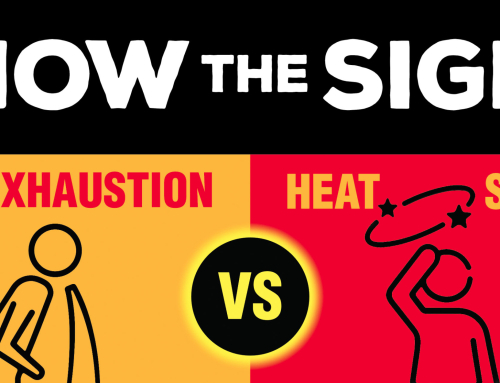
Supervisors and safety personnel must recognize early signs of heat-related illness: excessive fatigue, reduced work capacity, irritability, nausea, dizziness, or collapse. Heat exhaustion (profuse sweating, weakness, dizziness) precedes heatstroke (hot dry skin, confusion, loss of consciousness). Early intervention—moving the worker to a cool environment, providing water—can prevent progression to life-threatening heatstroke.
All supervisory staff should receive training on heat illness recognition, work/rest cycle implementation, and first aid response. Documentation of acclimatization and heat-related medical events should be maintained to support OSHA compliance.
6. Cooling Solutions for Oil & Gas: What Works and What Doesn’t
Oil and gas operators have tried various cooling approaches over the years. Understanding what works—and why other solutions fail—is essential to selecting the right mitigation strategy.
Misting Systems and Shade Structures
Water-spray misting systems can cool a shelter or area by up to 30°F below ambient in dry climates.12 Temporary shade structures (awnings, tents) block direct radiant heat from sunlight. Both approaches have merit in arid, low-humidity environments.
But on the Gulf Coast—Louisiana refineries, offshore Gulf of Mexico operations—misting effectiveness plummets. Evaporative cooling depends on air humidity. When ambient humidity exceeds 50% relative humidity (RH), evaporative coolers lose efficiency. At 70% RH (standard for Gulf Coast summers), evaporative coolers become nearly worthless, providing minimal temperature reduction.13 Gulf Coast refineries and Louisiana operations experience ambient humidity of 60–80% for much of the summer, rendering misting systems ineffective exactly where they’re most needed.
Evaporative Coolers (“Swamp Coolers”)
Evaporative cooler trailers are marketed as mobile cooling solutions for oil and gas operations. They work reasonably well in arid climates (West Texas, Wyoming, New Mexico) where ambient humidity is low. But performance degrades severely above 50% RH, dropping cooling capacity by 50% or more.13
For operators in humid regions—which includes many major producing areas—evaporative coolers are a poor investment. They appear cost-effective initially but fail to deliver adequate cooling when heat stress is most severe (high heat + high humidity).
Non-Evaporative Air Conditioning
Vapor-cycle air conditioning (traditional AC) is highly effective in all humidity conditions and delivers rapid thermal recovery for workers. The challenge is deployment: most commercial AC trailers require substantial electrical hookup (30–50A, 120/240V) and are designed for grid power. Remote well sites may have limited generator capacity or generators already dedicated to drilling operations.
Additionally, many standard AC systems use electrical motors and condensing units that cannot operate in Class I Division hazardous locations without expensive certification modifications. This electrical restriction eliminates most off-the-shelf cooling equipment from well site deployment.
Personal Cooling and Ice-Based Approaches
Phase-change cooling vests or ice-pack cooling can extend work duration in high heat, providing 1–2 hours of local cooling before needing re-cooling. These are useful supplementary tools but not complete solutions. Workers still require access to cooled rest areas for sustained thermal recovery.
7. The ClimateRig Advantage: Purpose-Built Mobile Cooling for O&G
The ClimateRig Cool-Down Trailer is engineered specifically for the demands of oil and gas operations. It addresses the convergence of challenges that make generic cooling solutions inadequate.
Non-Evaporative Cooling in All Climates
The ClimateRig uses vapor-cycle cooling (non-evaporative AC) with 32,000 BTU dual Fogatti InstaCool Ultra compressors operating on R32 refrigerant. This approach delivers consistent cooling regardless of ambient humidity—effective in arid Permian Basin heat and equally effective in humid Gulf Coast refineries. Unlike evaporative coolers, the ClimateRig’s cooling capacity does not degrade in humid environments.
Generator-Compatible Power and Water Independence
The ClimateRig operates on standard site generators using an L14-30 or equivalent 30A/120V receptacle. A 15kW generator is recommended, and fuel consumption runs approximately 1.2 gallons per hour—well within typical site power budgets. Critically, the ClimateRig requires no external water supply, making it ideal for remote Permian Basin sites where water availability is limited and water cost is prohibitive.
This water independence is a major operational advantage. Traditional misting systems and some evaporative coolers require 50+ gallons of water per day, a logistical burden at remote sites.
Sealed Insulation and CellTech Panel Technology
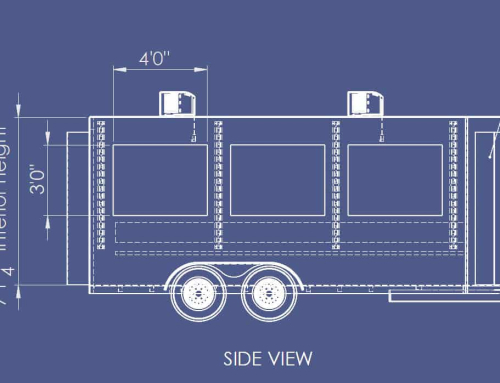
The ClimateRig interior features CellTech panel insulation, industry-leading thermal insulation technology. The sealed enclosure design (8′ × 12′ interior) provides a controlled, clean cool-down environment shielded from site dust, drilling mud, and flare radiation. Workers enter a genuinely cool environment rather than a marginal temperature reduction.
Mobile Trailer Format for Rapid Deployment
The ClimateRig is a towable trailer, not a fixed structure. It can be transported to remote well sites, drilling locations, equipment staging areas, and refinery hot zones. For operators rotating crews across multiple sites or moving from one drilling location to another, a single mobile unit provides flexibility that fixed shade structures or permanent facilities cannot match.
The Economic Case for Mobile Cooling
Operating a ClimateRig costs approximately $1,500–$1,800 per month in fuel and maintenance. Adding two full-time crew members to implement a safe work/rest cycle costs approximately $10,300+ per month in wages and benefits. A single heat-related incident—even a minor hospitalization—costs $5,000–$150,000 in direct medical costs, workers’ compensation claims, regulatory penalties, and lost productivity. The ClimateRig typically pays for itself within four months through incident prevention and crew efficiency improvements alone.
Learn more about how cool-down trailers work and their deployment advantages in our technical overview.
8. OSHA Compliance Checklist for Oil & Gas Heat Safety
Current OSHA enforcement operates under the General Duty Clause (Section 5(a)(1) of the OSH Act), which requires employers to provide a workplace free from recognized hazards, including heat stress. Heat is legally recognized as a hazard, and enforcement is aggressive.
General Duty Clause Enforcement and Penalties
OSHA’s position is clear: employers whose procedures fail to protect workers from heat-related illness face serious violation citations with penalties up to $16,550 per violation.14 In the oil and gas sector, OSHA Region 6 (covering Texas, Louisiana, Oklahoma, Arkansas, and New Mexico—major producing states) has an active Regional Emphasis Program (REP) for heat, ensuring aggressive enforcement in these critical regions.15
When the heat index is forecasted above 80°F in Region 6, employers must:15
- Train employees on hazards of hot environmental temperatures
- Make first aid supplies available appropriate for heat-related illness
- Provide drinking water in adequate quantities
- Provide shade or climate-controlled areas for rest breaks
- Protect vulnerable workers (new employees, recently returned workers) with closer supervision
- Have protocols for prompt medical attention if heat illness occurs
These requirements apply to oil and gas operations in Region 6. Operators in other regions should expect similar expectations under General Duty Clause interpretation, even without formal REPs.
API Standards and Industry Best Practices
API RP 74 (Recommended Practice for Occupational Safety for Onshore Oil and Gas Production Operation) and API RP 54 (Well Drilling and Servicing) address occupational safety broadly, including worker protection and environmental monitoring.16 While neither standard contains detailed heat stress sections, both reference general heat illness prevention as a component of overall worker protection programs.
Following NIOSH and ACGIH guidance on WBGT-based work/rest cycles exceeds API standards and demonstrates proactive compliance posture. Documentation of heat monitoring, acclimatization, supervisor training, and incident response provides strong evidence of due diligence if OSHA enforcement occurs.
Anticipated OSHA Heat Standard (2026–2027)
A comprehensive federal OSHA heat standard has completed its comment period (closed December 30, 2024) and is under final agency review. Once finalized, this standard is expected to establish mandatory work/rest schedules based on WBGT, acclimatization protocols for new workers, heat illness prevention plan requirements, and enhanced training and monitoring requirements applicable across construction, manufacturing, agriculture, and oil and gas.14
Operators who implement proactive heat safety programs now—including WBGT monitoring, work/rest cycles, and adequate cooling infrastructure—will transition smoothly to formal regulatory requirements when the standard becomes effective. Those who defer action face rapid compliance gaps when the rule is finalized. For more information on pending OSHA requirements, see our comprehensive 2026 employer guide to OSHA heat standards.
9. The Hidden Costs of Heat-Related Incidents in O&G
Heat stress prevention is not simply a safety or compliance issue—it’s an economic imperative.
Productivity Loss and Cognitive Impairment
In 2020, productivity loss from heat exposure cost the U.S. economy approximately $100 billion, with projected costs rising to $500 billion annually by 2050.17 In 2021 alone, more than 2.5 billion hours of labor across agriculture, construction, manufacturing, and service sectors were lost to heat exposure.17
Oil and gas operations experience this loss directly. Research on oil and gas workers in hot climates demonstrates that afternoon executive function, decision-making capacity, and equipment operation performance decline compared to morning baseline, even when core body temperature is only moderately elevated.17 This cognitive impairment affects drilling safety, equipment maintenance, troubleshooting capability, and safety compliance—exactly the high-stakes tasks that cannot tolerate performance degradation.
Medical Costs and Workers’ Compensation Claims
Heat exhaustion and heatstroke require medical treatment. Minor heat illness may be managed with first aid and rest, but moderate to severe cases require emergency transport, hospitalization, imaging, laboratory work, and specialist care. Workers’ compensation claims for heat-related illness include medical costs, wage replacement during recovery, and vocational rehabilitation in severe cases.
A single heatstroke fatality triggers wrongful death litigation, regulatory penalties, potential criminal prosecution, reputational damage affecting recruitment and safety standing, and insurance premium increases. The financial and operational consequences extend far beyond a single incident.
Absenteeism and Turnover
Workers exposed to severe heat stress experience higher absenteeism on extreme heat days and higher turnover due to heat-related discomfort. This impacts crew continuity, project scheduling, and training costs associated with replacing skilled personnel. See our detailed analysis of hidden costs of heat stress for full economic context.
10. Action Steps: Building Your Oil & Gas Heat Stress Prevention Program
Heat illness is preventable. The following steps translate knowledge into operational practice.
Step 1: Conduct a Heat Risk Assessment at Your Facilities
- Map radiant heat sources at your well sites and refineries: flare stacks, production equipment, steam lines. Identify worker zones most exposed to radiant heat.
- Measure ambient temperature and humidity during peak heat hours (typically 2–6 PM in summer).
- Calculate or measure WBGT at representative worker locations using professional instruments or WBGT calculation tools.
- Document shift patterns and work task intensity profiles. Identify roles with highest heat exposure.
- Review your current cooling infrastructure. Assess whether existing shade, misting systems, or cooling facilities meet WBGT-based work/rest requirements.
Step 2: Train Supervisors and Workers on Recognition and Response
- Conduct heat illness recognition training for all supervisory and safety personnel. Cover early signs (excessive fatigue, reduced work capacity, irritability, nausea, dizziness) and progression to heatstroke (hot dry skin, confusion, loss of consciousness).
- Train workers on hydration and acclimatization. Emphasize drinking water before thirst develops and the importance of gradual acclimatization for new or returning workers.
- Establish a heat illness response protocol. Document procedures for recognizing symptoms, moving affected workers to cool environments, providing first aid, and accessing emergency medical care.
- Document all training and maintain records demonstrating compliance due diligence.
Step 3: Deploy WBGT Monitoring and Define Work/Rest Cycles
- Purchase or lease professional WBGT instruments suitable for your site conditions. If Class I Division areas are involved, ensure instruments are hazmat-rated.
- Establish daily monitoring protocols: Measure WBGT at multiple locations across work areas, accounting for radiant heat proximity. Record measurements.
- Apply FRC correction factors. Add +10–59°F to measured WBGT for workers in flame-resistant clothing, reflecting the additional thermal burden.
- Define work/rest schedules based on WBGT thresholds and industry guidance (OSHA, NIOSH, ACGIH).
- Communicate schedules daily to all supervisors and crews so they understand work/rest expectations before their shift begins.
Step 4: Implement Adequate Cooling Infrastructure
- Assess your current cooling solutions. Are shade structures and misting systems effective in your humidity conditions? Evaporative coolers should only be considered in arid climates.
- Deploy air-conditioned rest areas. Provide genuine cooling (not shade alone) where workers can achieve rapid thermal recovery during rest breaks. For crew rotation operations, ensure rest facilities can accommodate multiple crews simultaneously.
- For remote well sites: Consider a mobile cool-down trailer (like the ClimateRig) that operates on site generators, requires no external water, and can be moved between drilling locations.
- Ensure equipment compliance with Class I Division hazardous location requirements if applicable at your sites. Cooling equipment should be positioned outside classified zones or certified for hazmat operation.
Step 5: Maintain Documentation and Continuous Improvement
- Keep daily WBGT records and work/rest schedules for regulatory review and trend analysis.
- Document all heat-related medical events or worker complaints, even minor ones, to demonstrate monitoring and response capability.
- Review program effectiveness annually: Are heat illness incidents decreasing? Are productivity metrics improving? Are workers and supervisors complying with protocols?
- Update procedures as regulatory requirements evolve. When the pending OSHA heat standard is finalized, integrate new requirements into your program.
For detailed guidance on protecting workers and monitoring requirements, see our comprehensive guide to monitoring and prevention.
11. Conclusion: Heat Stress Prevention as Operational Strategy
Heat stress in oil and gas operations is not an anomaly or a rare occupational hazard. It’s a documented, growing threat with measurable consequences: worker fatalities, hospitalizations, productivity losses, regulatory penalties, and litigation. Yet it is entirely preventable through systematic mitigation.
Oil and gas workers face unique thermal challenges—flame-resistant clothing that traps heat, extreme radiant heat from flare stacks and wellheads, remote sites without infrastructure, and continuous 24/7 operations. Generic heat safety guidance designed for construction or agriculture falls short. O&G operations require industry-specific solutions grounded in drilling operations reality, regulatory compliance requirements, and economic constraints.
The solution framework is clear: WBGT monitoring to quantify heat stress, work/rest cycles to manage thermal load, adequate cooling infrastructure to enable rapid thermal recovery, and crew rotation to maintain operational continuity. Operators implementing these measures now position themselves ahead of regulatory requirements and reduce heat-related incidents and their associated costs.
Ready to protect your O&G workforce from heat stress? The ClimateRig is built for oil and gas safety. Request a quote or contact our safety experts to learn how mobile cooling can reduce heat-related incidents at your well sites or refinery.
References
- Risk factors for heat-related illness resulting in death or hospitalization in the oil and gas extraction industry — PMC/NCBI (Peer-reviewed analysis of OSHA Severe Injury Report Database, 2015–2021)
- Death on the Job: The Toll of Neglect, 2025 — AFL-CIO (Annual occupational fatality report)
- Thermal Protective Performance of Oil and Gas Field Workers’ Clothing: A Review — Fire Technology, Springer Nature
- Flare Systems Design & Radiant Heat Emission — Oil & Gas Journal
- Wet Bulb Globe Temperature (WBGT): Measurement and Interpretation — National Weather Service
- To Beat the HEAT: Permian Basin Heat Exposure — Permian Basin Oil & Gas Magazine
- Heat – Water. Rest. Shade / Extended Work Shifts — OSHA
- eTool: Oil and Gas Well Drilling and Servicing – H2S Safety and Monitoring — OSHA
- WBGT Monitoring and Work/Rest Cycles — Korey Stringer Institute
- Occupational Exposure to Heat and Hot Environments — NIOSH Criteria Document
- OSHA Heat Enforcement & General Duty Clause — OSHA Heat Initiative
- Oil Rig Heat Stress Survival Guide & Cooling Solutions — Rocky Mountain Institute Wyoming
- Evaporative Cooling Effectiveness in High Humidity — Portacool
- Proposed OSHA Heat Standard and Enforcement Trends — OSHA Heat Initiative
- OSHA Region 6 Regional Emphasis Program (REP) for Heat Illnesses — Ogletree Deakins & National Law Review
- API RP 74 – Recommended Practice for Occupational Safety for Onshore Oil and Gas Production Operation — API / GlobalSpec
- Economic Costs of Heat-Induced Productivity Loss — Joint Economic Committee (Senate)
- How ClimateRig Helps Employers Meet OSHA’s New Heat Safety Standards — ClimateRig
- Cool-Down Trailers: What They Are, How They Work, and Why You Need One — ClimateRig
- Evaporative vs. Non-Evaporative Cooling — ClimateRig
About the author : Stephen

Stephen Allred is a dynamic and accomplished executive with over 20 years of experience in sales and marketing, currently serving as the CMO and CTO of ATS. Renowned for his ability to craft highly effective marketing campaigns, he drives business growth through cutting-edge technology and a results-oriented approach, focusing on high-impact strategies that align with corporate goals while steering clear of ego-driven pursuits. With a deep understanding of customer behavior, Stephen creates compelling campaigns that resonate with consumers, underpinned by the discipline to prioritize the most critical tasks. Boasting over 25 years of management experience, he is a committed leader dedicated to assembling talented teams and unlocking their potential to achieve ambitious objectives. As an adept strategist, he draws on an extensive study of both modern thought leaders and historical figures like Clausewitz and Sun Tzu to devise plans that propel corporate success. A champion of continual learning, Stephen stays ahead of industry trends and fosters a culture of innovation, encouraging his team to think creatively and embrace calculated risks. He graduated Magna Cum Laude from Utah Valley University with a Bachelor’s degree in Finance, where his exceptional performance earned him the prestigious “Outstanding Student Award.”