Cal/OSHA vs. Federal OSHA: Where Heat Illness Rules Differ in 2026
1. The 2026 Heat-Standard Landscape: One Federal Baseline, Seven State Standards
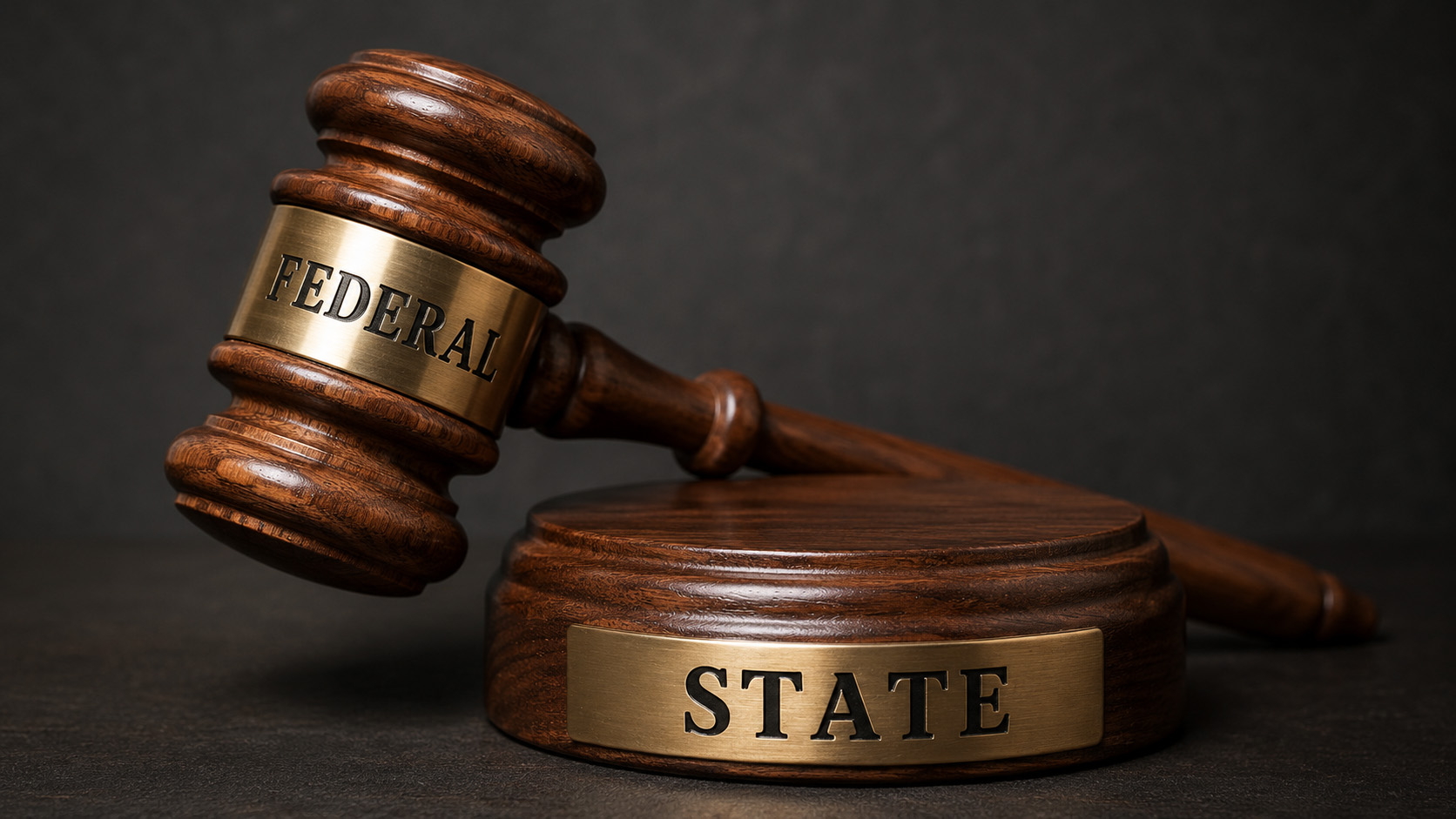
As of 2026, U.S. employers operate under a fragmented heat-illness regulatory landscape. Federal OSHA enforces heat hazards under the General Duty Clause and a national emphasis program, with a final federal rule under review. Seven states — California, Washington, Oregon, Minnesota, Maryland, Colorado, and Nevada — have their own heat-illness prevention standards that go beyond the federal baseline.
For multi-state employers, this means the same crew doing the same work can be subject to different shade triggers, different rest cycles, different recordkeeping rules, and different penalty exposure depending on which state line they’re working west of. For California-only employers, it means the most prescriptive heat standard in the country — one that gets re-litigated in safety meetings every spring around a handful of recurring questions.
This guide covers the federal baseline, the Cal/OSHA outdoor (§3395) and indoor (§3396) standards in detail, a comparison table of all seven active state standards, the eight Cal/OSHA questions employers most commonly ask, and a practical compliance checklist for multi-state operations.
2. Federal OSHA in 2026: NEP, General Duty Clause, and the Proposed Rule
Federal OSHA does not yet have a stand-alone heat-illness prevention standard. Today’s federal heat enforcement runs on three tracks.
The General Duty Clause
Under Section 5(a)(1) of the OSH Act, employers must provide a workplace free from recognized hazards likely to cause death or serious physical harm. OSHA has used the General Duty Clause for two decades to cite employers for heat exposure. The clause is broad and useful, but it is also notoriously fact-intensive in litigation.
The Heat National Emphasis Program (NEP)
In April 2022 OSHA launched the Heat-Related Hazards NEP (CPL 03-00-024), creating a programmed inspection target on outdoor and indoor work. The NEP was renewed and expanded in 2025. Through 2025, OSHA had conducted more than 6,000 heat-related inspections under the NEP and proposed millions of dollars in penalties.1
Under the NEP, OSHA can open a programmed inspection any day the National Weather Service issues a heat advisory, regardless of whether a complaint has been filed. The program targets 70+ industries identified as high-heat-risk, including construction, agriculture, oil and gas extraction, postal services, refuse collection, warehousing, and manufacturing.
The Proposed Federal Heat Standard
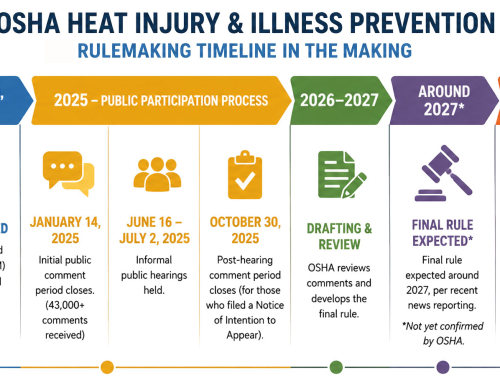
OSHA published a proposed rule for a national Heat Injury and Illness Prevention Standard in the Federal Register in 2024. The rule would establish, at the federal level, the kind of prescriptive requirements that California has had since 2005 — a written prevention plan, water and shade access, mandatory rest at defined heat triggers, and acclimatization protocols. The rule is in final-rule review as of 2026 and represents the most significant heat-illness regulatory development in U.S. occupational safety history.2
For details on the proposed federal rule and what changed in the 2026 update, see OSHA Heat Regulations 2026: What Changed & How to Comply.
3. Cal/OSHA §3395 (Outdoor): The Most-Cited State Standard in the Country
California Code of Regulations, Title 8, Section 3395 has been in effect since 2005, with substantive amendments in 2010 and 2015. It applies to all outdoor places of employment in California, with sharper requirements for industries Cal/OSHA has designated as high-heat: agriculture, construction, landscaping, oil and gas extraction, and transportation or delivery of agricultural products, construction materials, or other heavy materials.3
Core Requirements at a Glance
- Drinking water — fresh, pure, suitably cool, free of charge, with at least one quart per worker per hour available, encouraged at frequent intervals.
- Access to shade — shade must be present and available when temperatures exceed 80°F, and on request below 80°F. Shade must be open to the air or otherwise ventilated, and large enough to accommodate the workers on rest at the same time without contact.
- High-heat procedures — triggered at or above 95°F, requiring effective two-way observation, pre-shift meetings, designated heat illness contact, and a mandatory 10-minute cool-down rest every two hours in high-heat industries.
- Acclimatization — close observation of new employees during their first 14 days on the job, and of all employees during a heat wave (10°F+ above recent average and at least 80°F).
- Written Heat Illness Prevention Plan (HIPP) — in English and the language understood by the majority of employees, available at the worksite, including procedures for water, shade, high heat, acclimatization, emergency response, and training.
- Training — both employees and supervisors, on heat illness recognition, first aid, the employer’s HIPP, and the rights and obligations under §3395.
What “Access to Shade” Means in Practice
Shade under §3395 is more prescriptive than most employers realize. It must block direct sunlight, be ventilated (a closed metal trailer in direct sun is not shade), be present at the worksite (not a 20-minute drive away), and be sized to accommodate everyone on a recovery break at the same time without crowding. Cal/OSHA has cited employers whose only shade was a parked truck cab or a single tarp too small to fit a working crew.
4. Cal/OSHA §3396 (Indoor): The 2024 Expansion Most Operations Aren’t Ready For
In June 2024, California became the second state in the country (after Minnesota, which has had an indoor standard since the 1990s) to enact a comprehensive indoor heat-illness prevention standard. Cal/OSHA Title 8 §3396 took effect July 23, 2024, and applies to most indoor places of employment in California.4
When §3396 Triggers
- At or above 82°F indoor temperature — the standard applies. Employers must provide cool-down areas, water, emergency response, training, and acclimatization for new and returning employees.
- At or above 87°F indoor temperature — or 82°F when employees wear clothing that restricts heat removal or work in high-radiant-heat areas — engineering controls, administrative controls, and personal heat-protective equipment must be implemented to reduce risk.
The 87°F threshold is the one most operations underestimate. A metal-roofed warehouse on a 95°F afternoon routinely exceeds 87°F indoors, particularly near the work surface and at upper rack levels. Process-heat industries (foundries, glass, food processing, laundries) commonly run 90°F+ year-round.
Engineering Controls Required at the 87°F Threshold
Cal/OSHA’s regulatory text explicitly lists engineering controls as the first line of defense at the upper threshold — ahead of administrative controls and PPE. Examples include isolation of hot processes, air conditioning, increased ventilation, evaporative or mechanical cooling, shielding of radiant heat sources, and provision of cool-down areas with effective cooling.
5. State-by-State Comparison: The Seven Active Heat Standards in 2026
Beyond California, six other states have active heat-illness prevention standards in 2026. The table below summarizes the core triggers and key features.
| State / Citation | Scope | Key Triggers | Notable Features |
|---|---|---|---|
| California 8 CCR §3395 (outdoor) 8 CCR §3396 (indoor) |
Outdoor: all employers Indoor: most employers |
Outdoor: shade at 80°F, high-heat at 95°F Indoor: 82°F / 87°F |
Mandatory written HIPP, acclimatization, 10-min rest every 2 hrs in high-heat industries, indoor standard triggers engineering controls |
| Washington WAC 296-62-095 |
All outdoor employers | 52°F, 80°F, 90°F action levels | Made permanent in 2023; mandatory cool-down period at 90°F; written program |
| Oregon OR-OSHA Div 4 / OAR 437-002 |
All outdoor employers | 80°F heat index, 90°F additional protections | Acclimatization plan, emergency medical plan, training in language workers understand |
| Minnesota Minn. R. 5205.0110 |
Indoor work environments only | Categorized by light / moderate / heavy work load | Oldest U.S. heat standard (1990s); narrower scope; no outdoor coverage |
| Maryland COMAR 09.12.32 |
Outdoor and indoor | 80°F heat index trigger | First East Coast state with comprehensive standard (2024); HIPP required |
| Colorado HB21-1213 |
Agricultural workers only | 80°F | Sector-specific (agriculture); rest, water, shade, training |
| Nevada NAC 618.7270 |
Employers with 10+ heat-exposed workers | Job hazard analysis-driven | Effective 2024; required written heat illness prevention plan; broader than ag-only |
The remaining 43 states have no state heat standard and operate under the federal baseline (General Duty Clause + NEP + the proposed federal rule when finalized).
6. The 8 Cal/OSHA Heat Questions Employers Ask Most
After two decades of §3395 and a year-plus of §3396, the same edge cases come up every spring. Here are the eight most frequent — with the answers Cal/OSHA has provided in its enforcement guidance, advisory bulletins, and Frequently Asked Questions documents.5
Q1. Does Cal/OSHA’s heat illness rule apply during an employee’s lunch break?
Short answer: yes — with respect to access to shade and water. Cal/OSHA’s enforcement position is that employees on a meal or rest break do not lose their right to shade access and drinking water under §3395. The employer’s argument that an off-duty employee “chose” to sit in a hot vehicle does not relieve the obligation to provide compliant shade. The standard’s protections follow the worker, not the work shift.
The practical implication: if your meal break is on a jobsite where the temperature exceeds 80°F, you must still have compliant shade available and water accessible during that break. Sending the crew “off the clock” does not move the regulatory obligation.
Q2. What actually counts as compliant shade?
Cal/OSHA’s interpretation requires shade to be (a) blocking direct sunlight, (b) open to the air or otherwise ventilated (closed vehicles in direct sun do not qualify), (c) large enough to accommodate the number of employees on recovery and meal periods at the same time without crowding, and (d) located as close as practicable to the work area. A truck bed, an unventilated metal trailer, and a single small umbrella have all been the subject of citation in past Cal/OSHA enforcement.
Q3. When does the 95°F high-heat threshold trigger and what changes?
In high-heat industries (agriculture, construction, landscaping, oil and gas extraction, and transportation/delivery of agricultural products and construction materials), employers must implement high-heat procedures when the temperature reaches or exceeds 95°F. These include effective two-way observation of all employees, pre-shift meetings to remind employees of heat illness procedures, designating an employee to call emergency medical services if needed, and providing a mandatory 10-minute net cool-down rest every two hours.
Q4. What are Cal/OSHA’s acclimatization requirements?
Employees new to working in heat must be closely observed by a supervisor or designee for the first 14 days on the job. During a heat wave (defined as 10°F+ above the average high of the preceding five days, and at least 80°F), all employees must be closely observed regardless of tenure. Cal/OSHA has emphasized in enforcement that “close observation” is more than visual proximity — it is structured check-in, awareness of symptoms, and authority to intervene.
Q5. Does §3396 (the indoor standard) apply to my warehouse?
Almost certainly yes. The indoor standard applies to most indoor places of employment in California where the temperature reaches 82°F. Warehouses, distribution centers, manufacturing floors, food processing, laundries, and commercial kitchens are all covered. Limited exemptions apply (incidental heat exposure, certain emergency operations, prisons), but the default for indoor commercial and industrial work is that the standard applies.
Q6. Do I need a written Heat Illness Prevention Plan (HIPP)?
Yes, in writing, and in both English and the language understood by the majority of employees. The HIPP must include procedures for water provision, access to shade, high-heat procedures (where applicable), acclimatization, emergency response, and training. The plan must be available at the worksite and provided to Cal/OSHA on request. A generic boilerplate HIPP that doesn’t reflect your actual worksite is a citation risk.
For a step-by-step HIPP build, see How to Build an OSHA-Compliant Heat Illness Prevention Plan.
Q7. Are independent contractors and labor-supplied workers covered?
Cal/OSHA’s general position is that the controlling employer is responsible for ensuring the heat-illness protections at the worksite, regardless of who issues the paycheck. A general contractor cannot disclaim §3395 obligations for subcontractor crews working on the GC’s site. Labor-supplied workers are covered by the host employer’s HIPP. Multi-employer worksite citations are common in Cal/OSHA heat enforcement.
Q8. What records do I have to keep, and for how long?
Cal/OSHA expects employers to retain training records, the written HIPP, heat illness incident records (including any first-aid response, EMS calls, OSHA 300 entries), and any temperature monitoring data the employer chooses to collect. The general OSHA recordkeeping retention rules apply to the OSHA 300 / 301 forms (5 years). The HIPP itself should be a living document, dated and updated as worksites and exposures change.
7. Compliance Checklist for Multi-State Employers
For employers operating across state lines, the practical task is not memorizing seven sets of rules — it is building one operating standard that satisfies the most stringent of them. The most stringent is California. An operation that meets the Cal/OSHA §3395 / §3396 bar will, in nearly all cases, satisfy the federal baseline and the other six state standards as a byproduct.
A 12-Point Multi-State Compliance Checklist
- Written Heat Illness Prevention Plan, in English and the language(s) understood by the majority of each crew, available at every worksite, dated and updated annually.
- Drinking water — cool, fresh, free, at least one quart per worker per hour available, with consumption encouraged.
- Compliant shade at every worksite where temperatures exceed 80°F, sized to accommodate all workers on recovery / meal break simultaneously, ventilated, present at the worksite.
- WBGT or heat-index monitoring at high-heat-risk worksites — not just air temperature on a phone.
- High-heat procedures at 95°F: two-way observation, pre-shift meetings, designated EMS contact, mandatory 10-minute cool-down rest every 2 hours in high-heat industries.
- Acclimatization protocol for new employees (first 14 days) and all employees during heat waves.
- Engineering cooling controls — mechanical refrigeration, redundant cooling, dedicated recovery space — not reliance on shade and water alone.
- Indoor heat compliance for California operations — engineering controls at 87°F (or 82°F with restrictive clothing or radiant heat).
- Training for employees and supervisors, in language understood, on heat illness recognition, first aid, employer HIPP, and rights under the applicable standard.
- Emergency response procedures — clear EMS access, designated heat-illness contact on every shift.
- Recordkeeping — HIPP, training records, incident records, OSHA 300/301 entries, temperature monitoring logs.
- Multi-employer worksite documentation — clear allocation of heat-illness responsibilities between GC, subs, and labor-supply firms.
For the underlying work-rest math see OSHA Work/Rest Cycles in Heat: What Employers Must Know. For acclimatization protocols see Heat Acclimatization for Workers: The Science-Backed Protocol.
8. The Bottom Line for 2026
In 2026, U.S. heat-illness compliance is a moving target with one stable design principle: build to the most stringent state standard you operate under, and the rest takes care of itself. For most multi-state employers, that means building to California — the standard with the most prescriptive triggers, the most developed enforcement record, and the most explicit demand for engineering controls in indoor environments.
The federal baseline will likely move closer to that California bar when the proposed federal rule finalizes. The seven-state map of active standards will likely grow as more states act ahead of the federal rule. The handful of recurring questions — lunch breaks, shade definitions, high-heat triggers, indoor coverage, multi-employer responsibility — have settled answers under Cal/OSHA enforcement, and those answers are the safest design baseline regardless of jurisdiction.
For the engineering side — mechanical refrigeration, redundant cooling, recovery infrastructure that satisfies both the California indoor standard and the productivity math — see the Time on Tool guide for a 90-page playbook with WBGT-driven work-rest tables, ROI worksheets, and pre-season checklists.
References
- U.S. Department of Labor, OSHA, Heat-Related Hazards National Emphasis Program (CPL 03-00-024 and successor directives), 2022 launch and 2025 expansion. https://www.osha.gov/heat-exposure
- U.S. Department of Labor, OSHA, Heat Injury and Illness Prevention in Outdoor and Indoor Work Settings, proposed rule, Federal Register 2024.
- California Code of Regulations, Title 8, Section 3395 (Heat Illness Prevention in Outdoor Places of Employment). https://www.dir.ca.gov/title8/3395.html
- California Code of Regulations, Title 8, Section 3396 (Heat Illness Prevention in Indoor Places of Employment), effective July 23, 2024. https://www.dir.ca.gov/title8/3396.html
- California Division of Occupational Safety and Health, Heat Illness Prevention — Frequently Asked Questions and enforcement guidance. https://www.dir.ca.gov/dosh/heatillnessinfo.html
- Washington State Department of Labor & Industries, WAC 296-62-095 (Outdoor Heat Exposure).
- Oregon OSHA, OAR 437-002, Division 4 Heat Illness Prevention.
- Minnesota Rules, Minn. R. 5205.0110 (Indoor Ventilation and Temperature in Places of Employment).
- Maryland Occupational Safety and Health, COMAR 09.12.32 (Heat Stress Standards), effective 2024.
- Colorado HB21-1213 (Agricultural Workers’ Rights), heat stress provisions.
- Nevada Administrative Code §618.7270 (Heat Illness Prevention), effective 2024.
Related reading on ClimateRig.com:
- OSHA Heat Regulations 2026: What Changed & How to Comply
- How to Build an OSHA-Compliant Heat Illness Prevention Plan
- OSHA Work/Rest Cycles in Heat: What Employers Must Know
- Heat Acclimatization for Workers: The Science-Backed Protocol
- Cool-Down Trailers: What They Are, How They Work, and Why You Need One
- ClimateRig: Built to Outlast Your Longest Projects
About the author : Bryce Hinckley