Heat Stress on the Farm: Why Agriculture Has the Highest Heat-Fatality Rate and What Cal/OSHA §3395 Misses
1. The Number Nobody in the Industry Wants to Quote
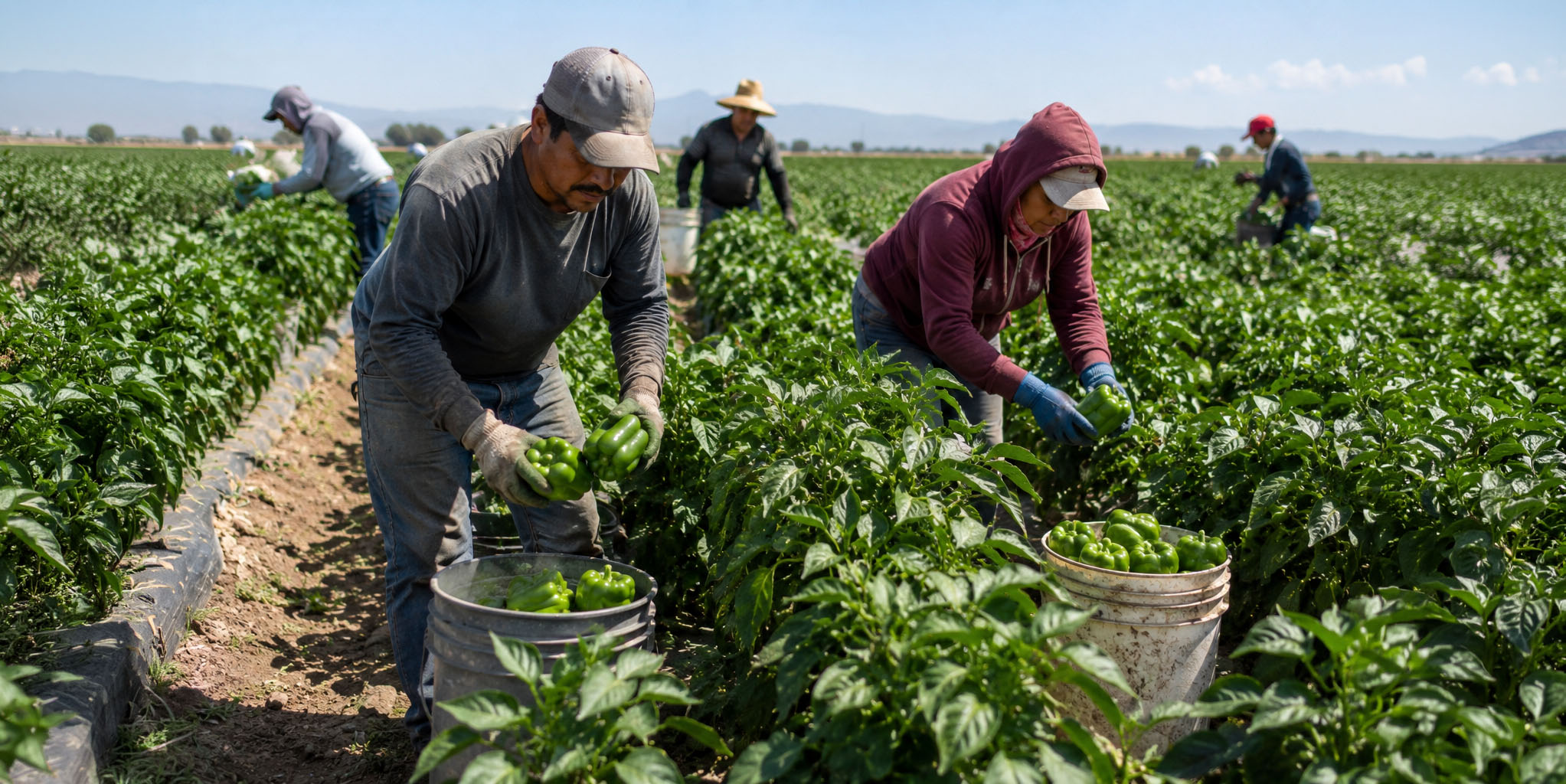
Agriculture leads every U.S. occupational heat-fatality ranking BLS publishes. Per the most recent multi-year analyses, agricultural workers die from heat-related causes at a rate roughly 20 times higher than the all-industry average. Construction gets more attention, oil and gas gets more regulatory focus, but the body count is on the farm.
That number is the floor, not the ceiling. Underreporting in ag is well-documented: undocumented workers do not file workers’ comp claims, migrant crews leave the state before incidents close, and field deaths are sometimes coded as “natural causes” or cardiac events when heat was the proximate cause.
California has had the most prescriptive heat-illness standard in the country since 2005, with substantive amendments in 2010 and 2015. Cal/OSHA §3395 saves lives. It also has predictable gaps that every farm safety manager working in the state has hit by mid-July.
This article is about those gaps.
2. What Cal/OSHA §3395 Gets Right
Before the criticism, the credit. §3395 establishes:
- Drinking water at a quart per worker per hour, available, suitably cool, free
- Shade access when temperatures exceed 80°F, sized for the crew, ventilated, present at the worksite
- High-heat procedures at 95°F+: pre-shift meetings, designated EMS contact, two-way observation, mandatory 10-minute cool-down rest every two hours
- A 14-day acclimatization protocol for new workers, plus heat-wave observation for everyone
- A written Heat Illness Prevention Plan in English and the language understood by the majority of employees
Compared to the federal General Duty Clause, this is night and day. The standard is the reason California’s agricultural heat fatality rate has come down meaningfully since 2005.
But the work the standard does not regulate is where the remaining deaths happen.
3. Gap One: The Crew Leader Is Not the Employer (On Paper)
Most California agriculture runs through a farm labor contractor (FLC) model. The grower hires the FLC. The FLC hires the crew leader, who hires and supervises the crew. The grower is legally a separate entity from the workers in the field.
Cal/OSHA has taken the position that multi-employer worksite responsibility applies — the controlling employer cannot disclaim §3395 obligations because the paychecks come from a contractor. In practice, enforcement is harder than the doctrine suggests.
When the inspector arrives:
- The grower says the FLC is responsible for HIPP compliance.
- The FLC says the crew leader executes day-to-day.
- The crew leader, who is often a worker themselves and rarely trained as a safety professional, is the actual point of decision-making in the field.
The result is a structural diffusion of responsibility. The §3395 obligations exist on paper at the grower and FLC level, but the field reality is that a crew leader with no formal safety training is making the call on when to stop work, when to call in shade, and when to escalate a symptomatic worker. The standard does not require crew leader certification, only training, and training varies wildly in quality.
4. Gap Two: Piece-Rate Pay Punishes the Worker Who Takes the Break
Cal/OSHA’s high-heat procedures require a 10-minute cool-down rest every two hours in high-heat industries. The standard does not, however, mandate that this rest be paid at the worker’s piece-rate average.
In strawberry, blueberry, table grape, and other piece-rate harvests, a worker who takes the mandated break loses earning time. California’s piece-rate pay statute (Labor Code §226.2) requires separate compensation for “rest and recovery” periods, but enforcement is inconsistent and the worker on the row knows the math: every minute in the shade is a minute not picking.
The economic incentive runs directly counter to the safety incentive. A standard that requires a break but does not protect the income of the worker who takes it is a standard that gets quietly underused. This is the gap most outsiders miss.
What works in the field:
- Crew-wide synchronized breaks rather than individual breaks (removes the social cost of being the first to step away)
- Piece-rate adjustments that explicitly compensate the rest period at the worker’s individual hourly average, documented on the pay stub
- Shade that is close enough to the work face that the break does not consume travel time on top of recovery time
5. Gap Three: Language, Literacy, and the HIPP That Nobody Reads
The §3395 training requirement specifies instruction in the language understood by the employee. In practice this means Spanish in most California ag, plus Mixtec, Triqui, Hmong, Punjabi, and Mam in specific regions. The standard does not require the HIPP itself to be translated into oral indigenous languages, which means literate Spanish translation is the de facto delivery method even where it does not match the population.
The result is a training compliance posture (signed sheets, video viewed, pre-shift meetings held) that is technically compliant but produces no actual behavior change in workers whose first language is not Spanish or English.
What works:
- Visual and pictographic HIPP elements (icons for heat-illness symptoms, color-coded canopy availability)
- Trained crew-level “heat captains” who speak the indigenous language and translate the supervisor’s calls in real time
- Mandatory teach-back during training rather than passive viewing — the worker explains the symptoms to the trainer, not the other way around
6. Gap Four: The Mobile, Migratory Nature of the Work Itself
A construction site has a fixed address. A farm has fields. A migrant ag crew may work three counties in a single week, on land owned by different growers, contracted through different FLCs, with different field layouts and water-source distances every Monday.
§3395 requires shade at the worksite. The standard does not specify how much shade-relocation effort is reasonable as the crew moves through a 40-acre block. Tarp-and-pole shade structures that are technically compliant when measured at the truck rarely follow the crew as the harvest line progresses.
This is where mobile cooling infrastructure has the biggest gap to close. A 125 sq. ft. cool-down trailer like ClimateRig™, towable on a half-ton truck, can be repositioned to the active edge of the harvest line in a single move. Two 15,000 BTU AC units cooling 18 workers at a time, parked at the row where the crew is actually working, satisfies §3395’s “as close as practicable” interpretation in a way that a tarp staked next to the equipment trailer does not.
For the engineering side, see ClimateRig™: Built to Outlast Your Longest Projects.
7. What an Honest Ag Heat Program Looks Like
Past §3395 compliance, the programs that actually move the fatality number share five features:
- Synchronized crew breaks with paid recovery time at the worker’s piece-rate average
- Indigenous-language heat captains embedded in every crew, trained on symptom recognition and authorized to stop work
- Mobile recovery infrastructure that moves with the harvest line, not parked at the staging area
- Pre-shift WBGT readings taken at the work face, not at the equipment trailer in shade
- Real after-incident reviews — when a worker is sent home symptomatic, what happened, what was missed, what changes Monday morning
The crews that lose workers are not the ones who never read the HIPP. They are the ones whose paper compliance has decoupled from the field reality.
8. The Bottom Line
- Cal/OSHA §3395 is the strongest agricultural heat standard in the country and the reason California’s ag heat deaths have declined since 2005
- The remaining fatalities cluster in four structural gaps: crew-leader-as-employer, piece-rate pay disincentives, language and literacy mismatch, and the mobile geometry of harvest work
- A compliant program is the floor. An operating program addresses the four gaps directly and treats the crew leader as a safety decision-maker who needs real training, not just signed acknowledgement forms
- Mobile recovery infrastructure that follows the harvest line is the single piece of capital equipment that closes the geometry gap most reliably
Related reading on ClimateRig.com:
- Cal/OSHA vs. Federal OSHA: Where Heat Illness Rules Differ in 2026
- Heat Acclimatization for Workers: The Science-Backed Protocol
- OSHA Work/Rest Cycles in Heat: What Employers Must Know
- The Hydration Math: Gallons Per Worker, Electrolyte Ratios, and Why Plain Water Falls Short
- Cool-Down Trailers: What They Are, How They Work, and Why You Need One
- ClimateRig™: Built to Outlast Your Longest Projects
Want a sample ag-specific HIPP supplement that covers the four gaps? Visit atspro.co/BPX-Farm or call 800.747.9953 for a 15-minute farm heat-program review.
About the author : Bryce Hinckley