Warehouse and Distribution Center Heat: When Cal/OSHA §3396 (Indoor) Applies and the Real Cost of Compliance
1. The Standard Most Warehouse Operators Have Underestimated
When Cal/OSHA §3396 (Heat Illness Prevention in Indoor Places of Employment) took effect on July 23, 2024, most California warehouse and fulfillment operators read the press release, noted that the standard “applies above 82°F indoors,” and moved on. The assumption was that a typical distribution center, with HVAC running and roll-up doors closed, rarely hits 82°F.
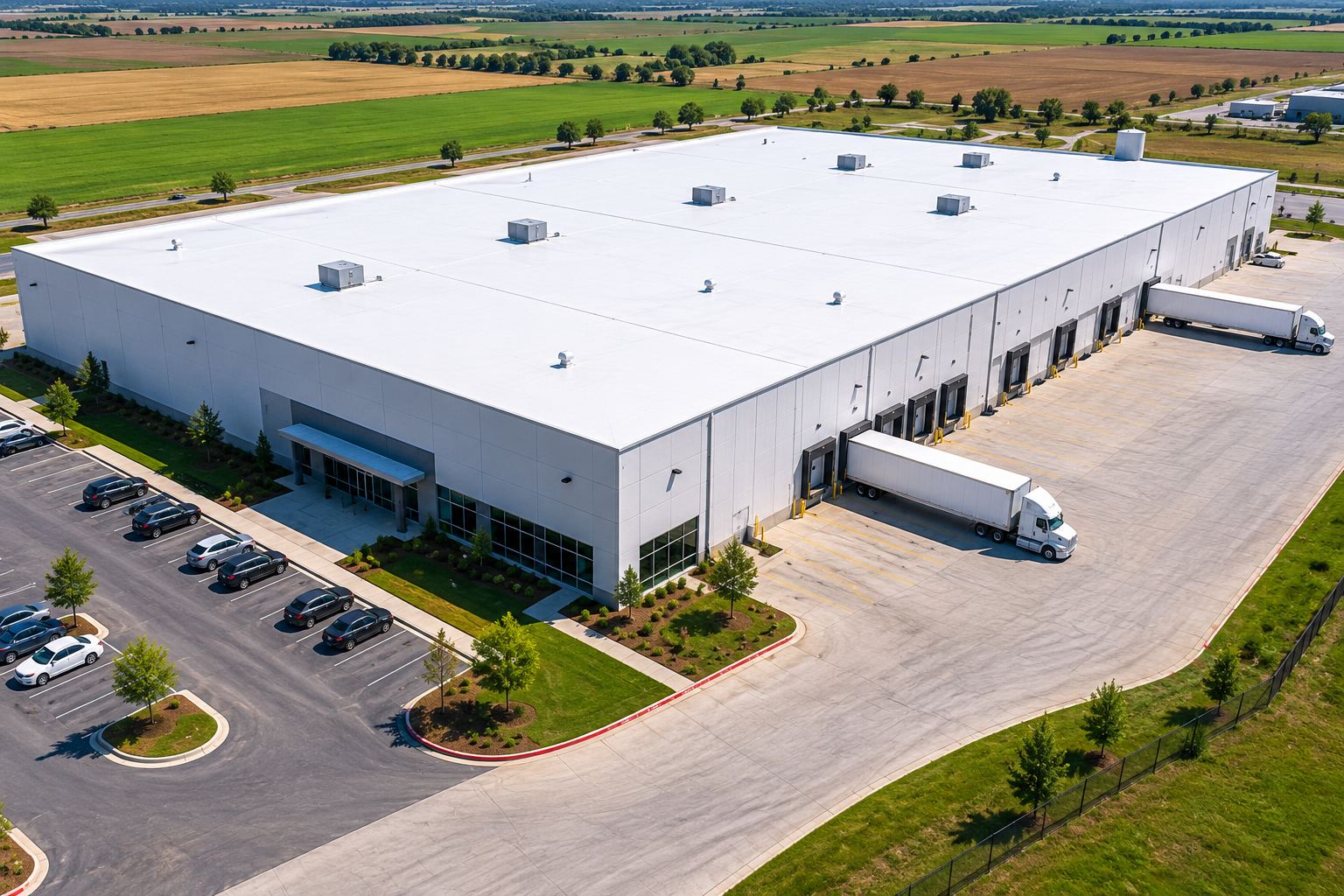
That assumption is wrong. Metal-roofed warehouses in California’s Central Valley, Inland Empire, and Imperial Valley routinely hit 87°F+ indoors by mid-morning on summer days, particularly at upper rack levels and at loading dock zones where bay doors are open. Cold-chain pre-cool zones, ambient-temp storage adjacent to refrigerated areas, and any facility with process heat (label printers, shrink-wrap stations, automated sortation) run hotter still.
This article is about when §3396 actually triggers, what the standard requires at each threshold, what compliance actually costs, and the audit posture warehouse operators should expect from Cal/OSHA inspectors in 2026 and beyond. For the broader Cal/OSHA framework see Cal/OSHA vs. Federal OSHA: Where Heat Illness Rules Differ in 2026.
2. When §3396 Triggers: The 82°F vs. 87°F Distinction
The standard has two thresholds and they require very different things.
At or above 82°F indoor temperature, the standard applies. The employer must provide:
- Cool-down areas accessible at all times during work
- Drinking water meeting the §3395 outdoor standard (one quart per worker per hour, suitably cool, free)
- Heat illness emergency response procedures
- Training for employees and supervisors
- Acclimatization observation for new employees and workers returning from absence
At or above 87°F indoor temperature — or at 82°F if workers wear clothing that restricts heat removal or work in high-radiant-heat areas — the standard requires implementation of the hierarchy of controls: engineering controls (isolation of hot processes, AC, increased ventilation, evaporative cooling, radiant heat shielding, cool-down areas with effective cooling), administrative controls (work-rest cycles, acclimatization, modified schedules), and personal heat-protective equipment.
The 87°F threshold is the one most operators underestimate, and it is the one with the biggest cost impact when triggered.
3. The 87°F Floor Is Lower Than You Think
The 87°F threshold lands on more facilities than most warehouse operators realize. Six common scenarios that trigger it:
- Metal-roofed warehouses on 95°F+ exterior days. Roof heat radiates downward; upper-rack pickers and high-bay material handlers operate in air noticeably hotter than the floor-level thermostat.
- Loading dock zones with bay doors open. Even an HVAC-conditioned facility shows 5 to 15°F warmer zones near open bays during truck loading.
- Cold-chain pre-cool / staging areas. Workers move between 35°F refrigerated zones and 80°F+ ambient areas multiple times per shift. The transition zone often runs 90°F+ as warm outside air meets cold storage.
- Process heat from equipment. Shrink-wrap stations, automated sortation, label printers, charging zones for forklift batteries.
- Workers wearing restrictive clothing. Cold-chain workers in insulated suits triggering the 82°F threshold instead of 87°F. PPE-required food processing facilities. Hazmat handling.
- High-radiant-heat areas. Workers near furnaces, ovens, glass, or other process equipment that radiates heat — common in light manufacturing colocated with warehouse operations.
Operators who measured temperature only at the office thermostat and called the facility compliant are increasingly seeing Cal/OSHA inspectors arrive with handheld thermometers and measure at the rack level, at the loading dock, and at the transition zones — and finding 87°F+ exposure the operator did not know existed.
4. Where Engineering Controls Are Now Required
At the 87°F threshold (or 82°F under the restrictive-clothing/radiant-heat conditions), Cal/OSHA’s regulatory text explicitly puts engineering controls at the top of the hierarchy. Examples the regulation names:
- Isolation of hot processes
- Air conditioning
- Increased ventilation
- Evaporative or mechanical cooling
- Shielding of radiant heat sources
- Provision of cool-down areas with effective cooling
The hierarchy matters because Cal/OSHA inspectors will look for engineering controls FIRST. An employer who has implemented only administrative controls (work-rest cycles, training) without engineering controls at a facility that triggers the upper threshold has a compliance defect even if the workers are not symptomatic.
This is the single most common citation pattern under §3396 in 2026: warehouses that put a fan and a water cooler in a “cool-down area” without addressing the engineering side. A fan is not air conditioning. A cool-down area at 86°F is not a cool-down area under the standard.
5. What Compliant Cool-Down Looks Like Inside Four Walls
The standard requires cool-down areas that allow the body to cool. In practice, that means:
- Air temperature meaningfully cooler than the work area — generally interpreted as below 80°F, with 70 to 75°F as the operating target
- Seating sufficient for the workers on simultaneous recovery breaks
- Drinking water available in the cool-down area, not only at the work zone
- Located close enough to the work area that the walk does not consume the recovery time
- Available during all work hours, not just designated break periods
Inside a warehouse facility, two options work:
Option 1: Engineered conditioned room. Existing office space, breakroom, or dedicated room with HVAC sized for the expected occupancy. Capital cost varies; ongoing operating cost is HVAC.
Option 2: Mobile cool-down trailer parked at the dock or staging area. A 125 sq. ft. trailer like ClimateRig™ with dual 15,000 BTU AC units provides a documented, photograph-able, OSHA-defensible cool-down environment that can be repositioned if the work zone changes — useful for facilities that have seasonal work zones, project-based hot work, or operations that move within a campus.
The trailer option is increasingly used by 3PL and contract logistics operators who do not own their facilities and cannot retrofit HVAC into a leased warehouse.
6. The Real Cost of Compliance: Three Scenarios
Compliance cost depends entirely on starting condition. Three scenarios that cover most California warehouse operators:
Scenario A — Modern, HVAC-conditioned fulfillment center. Probable cost: low. HVAC is sized for occupant comfort and likely keeps the work floor below 82°F most of the year. Spot upgrades at loading docks, rack-level fans, written plan and training are the primary compliance items.
Scenario B — Metal-roof warehouse without full HVAC. Probable cost: high. Roof-mount HVAC retrofits are capital-intensive. Cool-down areas with engineered cooling are required. Many operators in this scenario are choosing mobile cool-down trailers as the engineering control because the capital is significantly less than full HVAC retrofit, and the trailer is depreciable equipment with operational flexibility.
Scenario C — Cold-chain or process-heat facility. Probable cost: moderate to high. The restrictive-clothing or radiant-heat trigger pushes engineering controls to the 82°F threshold instead of 87°F. Engineering controls may include process heat shielding, evaporative cooling at transition zones, and dedicated cool-down areas for workers in restrictive PPE.
The CFO question on every one of these scenarios is the same: what does §3396 add to the annual operating cost vs. the capital cost of the engineering control, vs. the citation exposure of remaining non-compliant. The answer is now favoring engineering controls in most scenarios — the citation exposure plus the workers’ comp impact has moved past the capital cost of compliance.
7. The Cal/OSHA Audit Posture for Indoor Heat
Cal/OSHA inspectors performing §3396 audits in 2026 are working from a consistent pattern. Operators should expect:
- Temperature measurement at multiple points, not just the office thermostat. Inspectors carry handheld thermometers and measure at the rack level, the loading dock, the transition zones, and any process heat areas.
- Review of the written Heat Illness Prevention Plan, which must be available at the worksite and must specifically address indoor work conditions if the facility is covered. See How to Build an OSHA-Compliant Heat Illness Prevention Plan.
- Training records in the language understood by the majority of employees, including indigenous languages where applicable.
- Cool-down area inspection: location, capacity, temperature, water availability, signage.
- Acclimatization documentation for new hires and workers returning from absence, including those returning from refrigerated areas.
- Multi-employer worksite scrutiny if the facility uses staffing agencies, contract labor, or 3PL employees inside the operator’s space.
The audit posture is more rigorous than most warehouse operators experienced for the §3395 outdoor standard, and the indoor environment makes the evidence (temperature records, dock conditions, transition zones) easier for inspectors to document.
8. The Bottom Line
- §3396 applies to most California indoor warehouse, fulfillment, 3PL, cold-chain, and process-heat facilities
- The 82°F vs. 87°F distinction is the compliance pivot; the 87°F threshold is lower than most operators realize once you measure at rack level and at loading docks
- Engineering controls are at the top of the hierarchy at the upper threshold — fans and water are not enough
- Mobile cool-down trailers are increasingly the engineering control of choice for operators who lease facilities or have moving work zones
- Cal/OSHA audit posture in 2026 is rigorous, methodical, and centered on documentation the operator may not have collected
For multi-state operators, §3396 is the leading indicator of where the federal indoor heat standard is heading. Building to California’s bar now is the cheapest path to federal compliance later.
For the engineering side and a 90-page playbook, see the Time on Tool guide.
Related reading on ClimateRig.com:
- Cal/OSHA vs. Federal OSHA: Where Heat Illness Rules Differ in 2026
- OSHA Heat Regulations 2026: What Changed & How to Comply
- How to Build an OSHA-Compliant Heat Illness Prevention Plan
- OSHA Work/Rest Cycles in Heat: What Employers Must Know
- Cool-Down Trailers: What They Are, How They Work, and Why You Need One
- ClimateRig™: Built to Outlast Your Longest Projects
Want a §3396 compliance worksheet with the temperature-measurement protocol and cool-down area sizing matrix? Visit atspro.co/BPX-Warehouse or call 800.747.9953 for a 15-minute warehouse compliance review.
About the author : Bryce Hinckley